A Brief Excursion into the Mechanism of a Cat’s Fall
Achtung! Achtung! Vorsicht! Fall. The desire to wake up is great, but what if we feel even worse afterwards? Or better. Let’s imagine a dream: a fall through the abyss, no solid ground at the bottom, and a tightening feeling inside us. We feel sick because no one can guarantee a soft landing. Will we manage to twist around in time and land on all fours? And if not, will our broken leg heal as quickly as our mind? And if not, will anyone take it into account? And if not, what impact will it have on society?
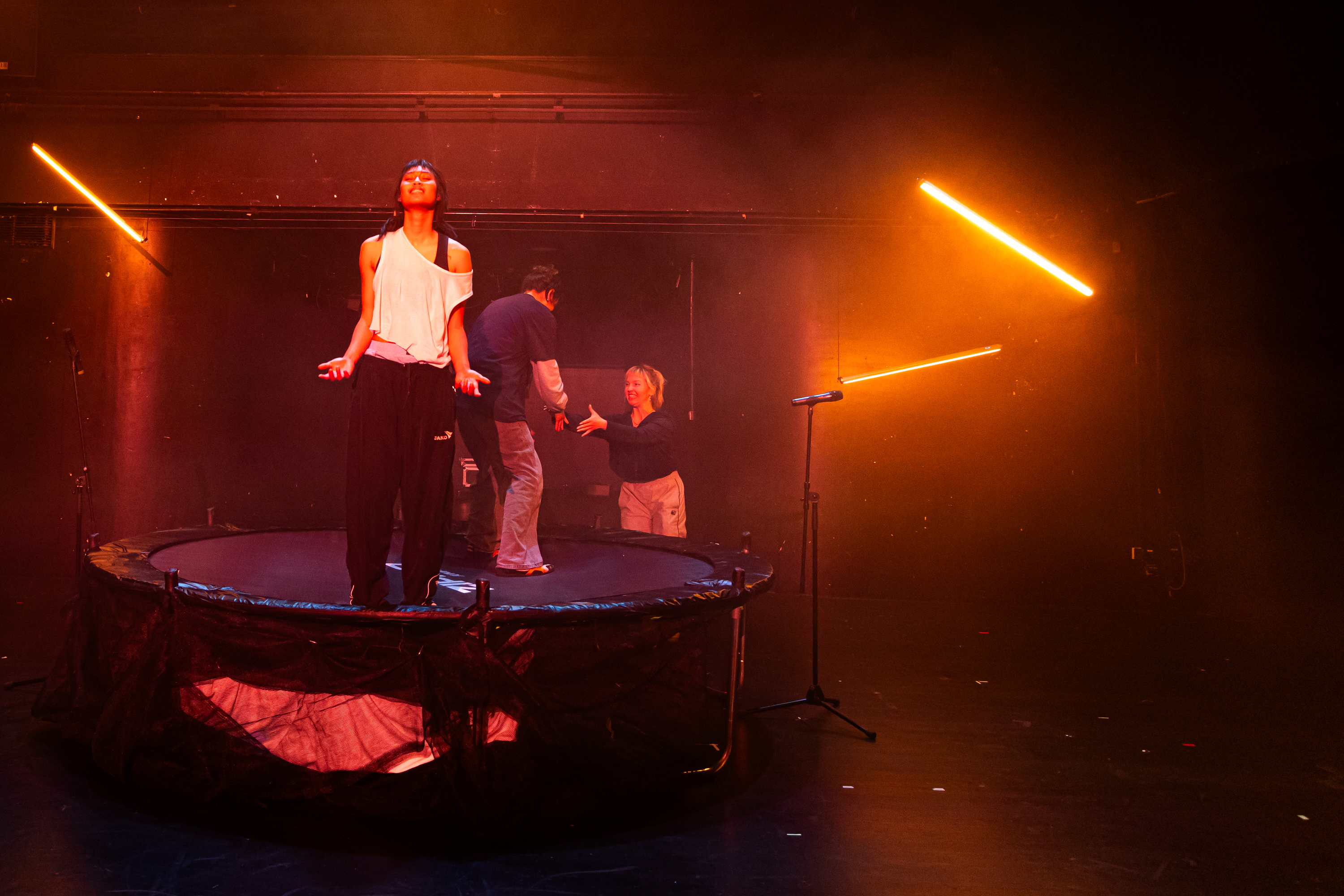
From Germany, the Hochschule für Musik und Theater Hamburg brings the chamber production Landing to The International Festival of Theatre Schools SETKÁNÍ/ENCOUNTER, linking the themes of mental health and police violence. The production team, directed by NiyoushaAzari, aims to synthesize the genre of original fiction with documentary theater, based on the story of three main characters, one of whom, Cana, becomes a victim of police violence.
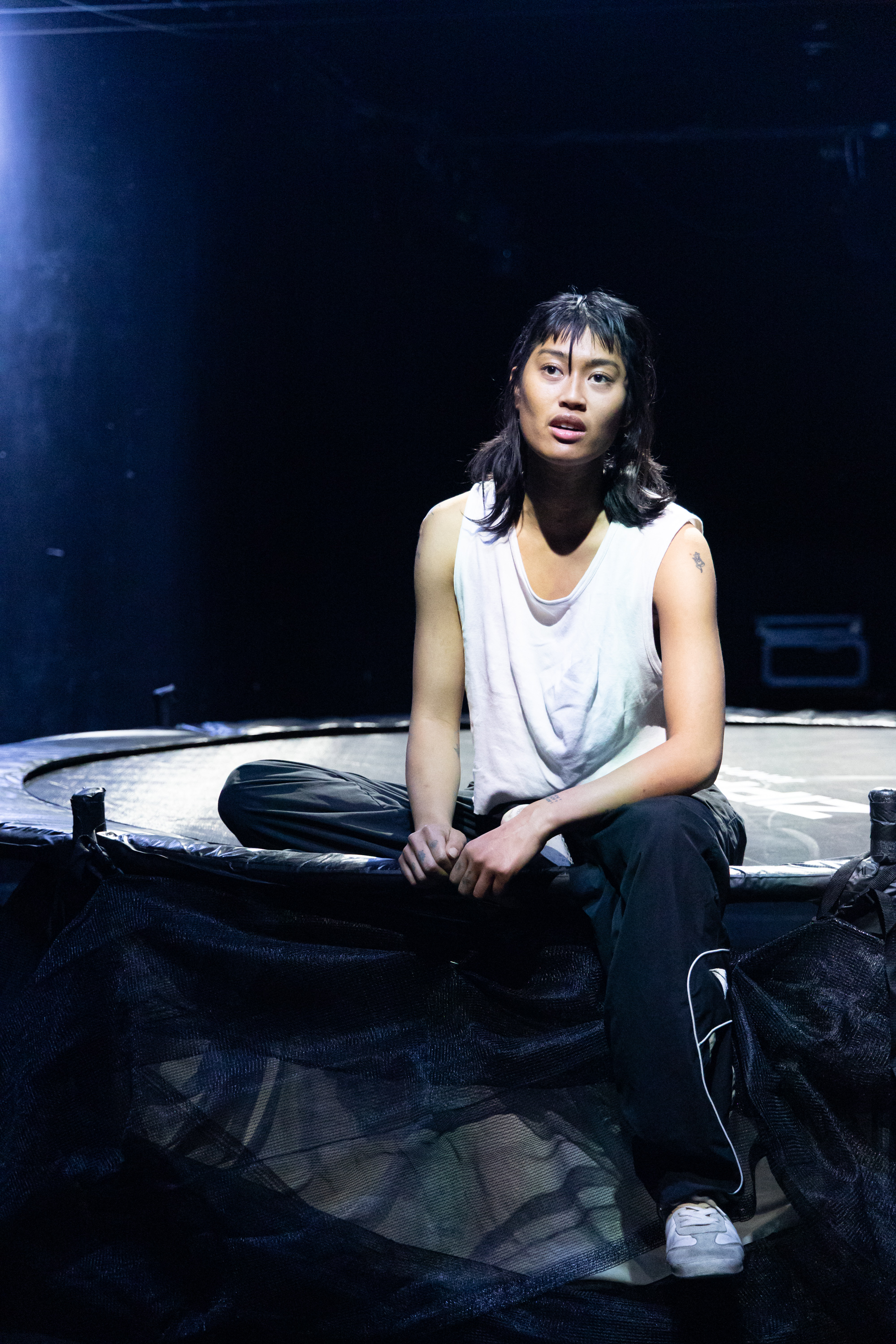
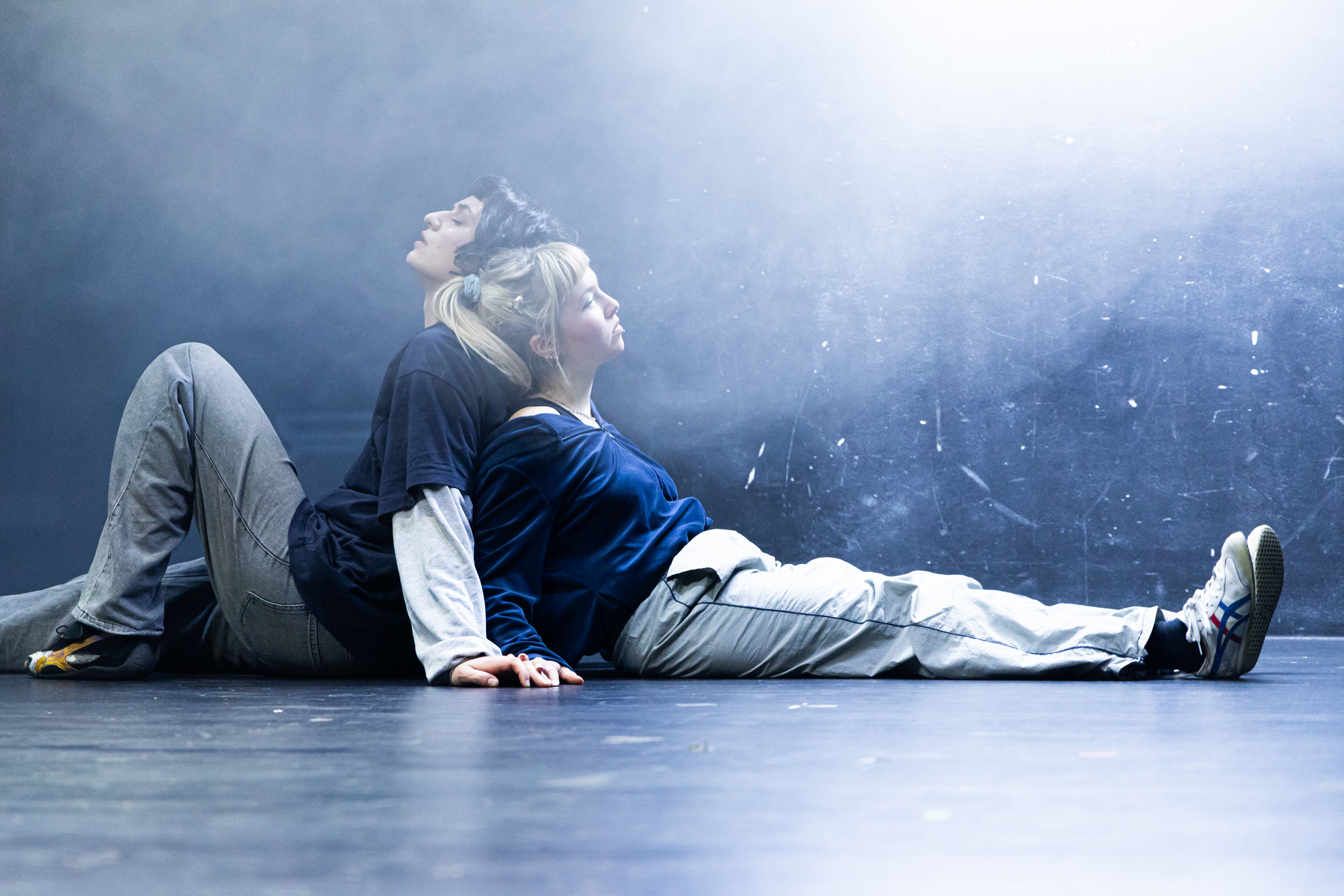
The performance is split into two parts. In the first half, the dramatic setting is a kind of abstract, dreamlike timelessness, in which we only distantly sense a hospital. The dramatic text primarily explores the feeling of anxiety, dealing with traumatic experiences, and their consequences. It presents a vision of life as an eternal fall into the unknown, at the end of which nothing matters but the landing. It would be simplistic to interpret this landing merely as death or human finiteness, but in the context of the performance, it is more about processing mental shocks and finding inner peace. Through two fantastical stories – one about a man who fell from a height and landed uninjured like a cat, and another about a lady who broke her leg but was actively cleaning her house two weeks later – the text touches upon, and critically reflects on, the societal expectation of an eternally positive approach to life, while aptly pointing out the distinction between mental and physical health.
In the second part, the production leans toward the genre of documentary theater. It lists individuals in Germany who have died as a result of excessive police force. When it comes to the motives, the theme is grasped through the element of cruelty and the role of executive power. However, the transition from the dreamlike, introspective first part to the documentary section is not clearly justified within the structure of the performance, and it is therefore not entirely certain if or how the two parts relate to one another. Only near the very end is Cana's fate revealed to the audience, something which ultimately connects the individual parts of the play.
The rehearsals for the production lasted only two weeks, yet the creative team managed to build a compact chain of motifs that they developed and repeatedly returned to. The only criticism remains the indistinct connection between the two main themes (and thus the two parts of the production) solely through the character of Cana. Perhaps, if the history of this character and the relationships between the individual heroines were more clearly outlined through the text or acting, it would have allowed the creators to work with even deeper layers of the main themes.
Author: Anna Seifertová
Foto: Věra Tarkowská