Actors do weird sh*t
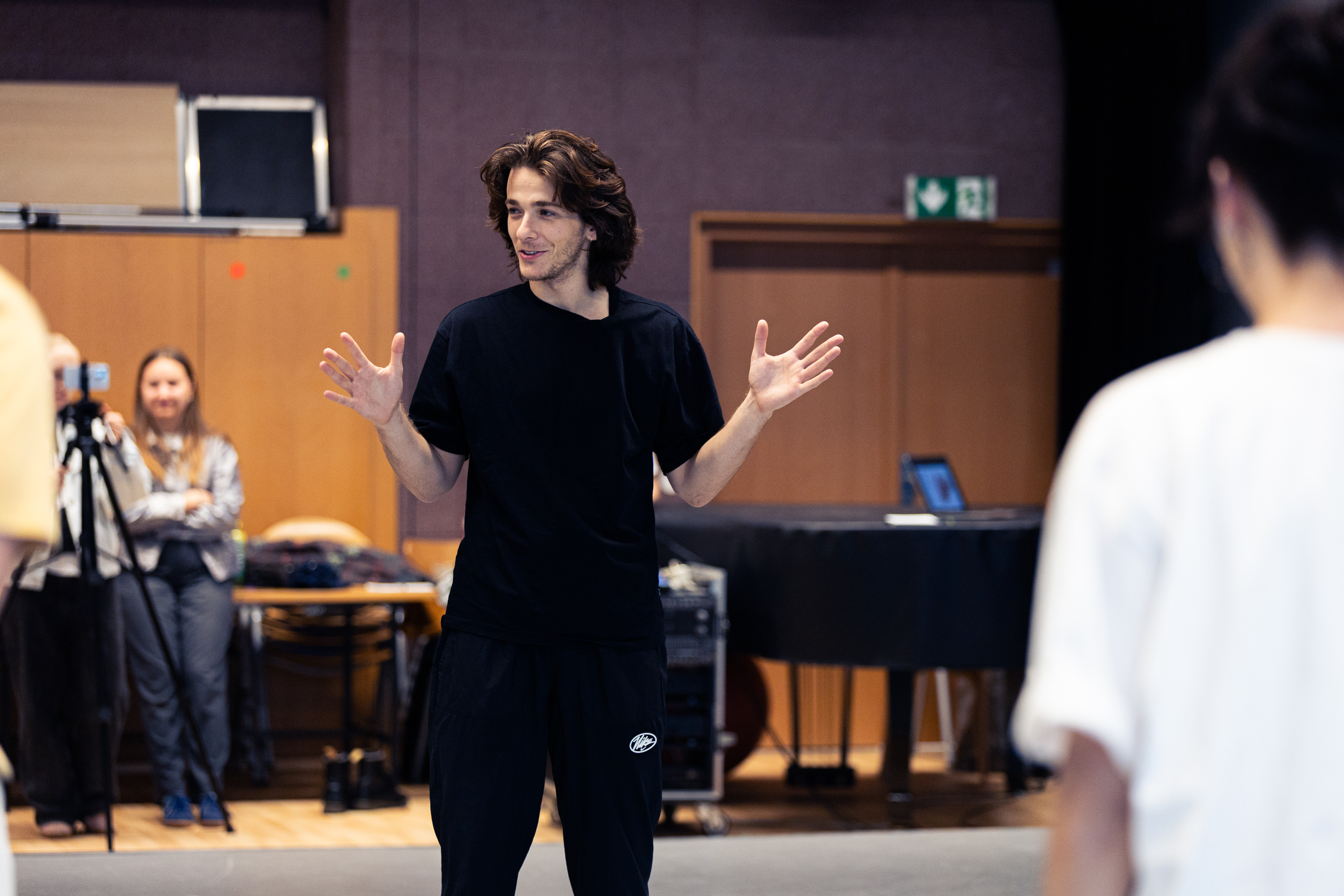
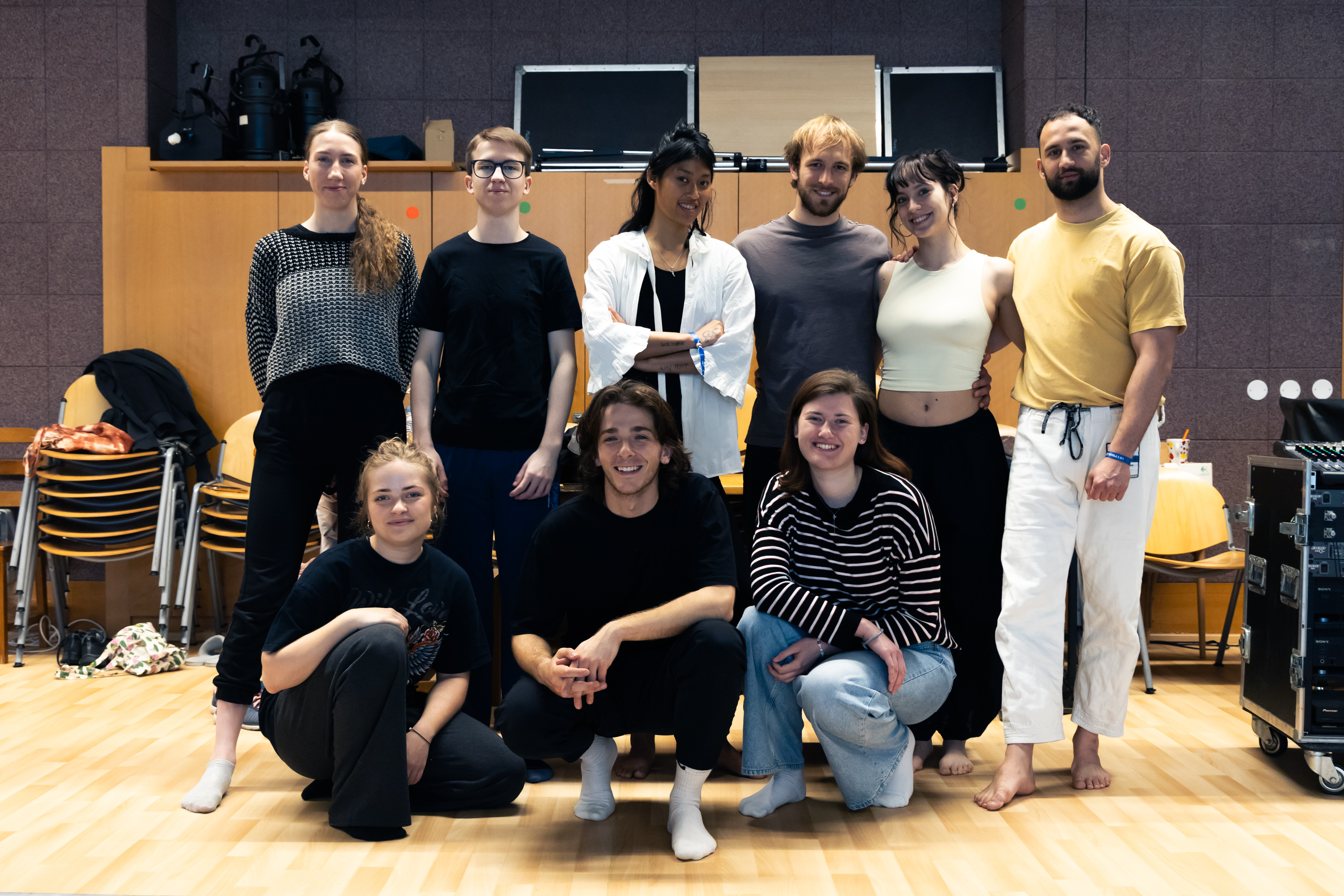
The third festival day of The International Festival of Theatre Schools SETKÁNÍ/ENCOUNTER 2026 kicked off with a workshop called Actors Training, led by young actor Tomáš Weber, who stars in the new adaptation of the fairy tale Goldilocks (2025). Weber, alumnus of the Janáček Academy of Performing Arts (acting) and ambassador of this year’s festival, utilizes not only the techniques of Jerzy Grotowski or Michail Chekhov, but also of his teacher, Oxana Smilková.
How does it feel to be back at JAMU, your alma mater, and to lead a workshop here?
“To be back at JAMU is like coming back home to your parents’ house, to your childhood bedroom. And in the meantime, they’ve changed it into a gym or painted the walls. Your things are still there, but you feel that the space has a different use.”
To introduce themselves, the participants form a circle, say their name and the colour which best matches their current mood. In this exercise you can already see the open and calm atmosphere Tomáš Weber strives to cultivate, as the colours vary extensively. His instructions are clear from the beginning, and they’refollowed by a short demonstration.
The first exercise consists of moving around and having an inner dialogue. The participants focus on their feeling and how their body reacts. Afterwards came stretching and slow but sure activation of every body part, naturally complemented by everyone’s voices. For actors it’s vital to be able to open up and have an effect on the audience through authentic experience.
During the next exercise, focused on breathing, the participants once again form a circle. The task is simple: to breath with a specific feeling. In that moment, a sense of relief fills the room, one that no longer feels like an acting exercise, but rather a genuine physical experience.
“Imagine that you have met the deadline.”
The focus then shifts to individual parts of the body, starting from the feet and gradually moving upwards.
“…it’s okay to feel nothing.”
The image of a white balloon rolling across the body, followed by the warmth of sunlight moving from head to toe, leads to gradual calming down and a deeper awareness of one’s body. Weber then smoothly transitions to the principles of Jerzy Grotowski.
“Just listen to your body.”
What initially appears to be a simple warm-up turns into a full activation of the body, which is essential,especially for physical theatre and pantomime.
What is most important to you in acting? Warming up your body and voice before a performance, or rehearsing your lines?
“The most important thing is to prepare yourself in some way. It’s not about how. It’s about having time before the performance to prepare my mind and body for what’s about to happen.”
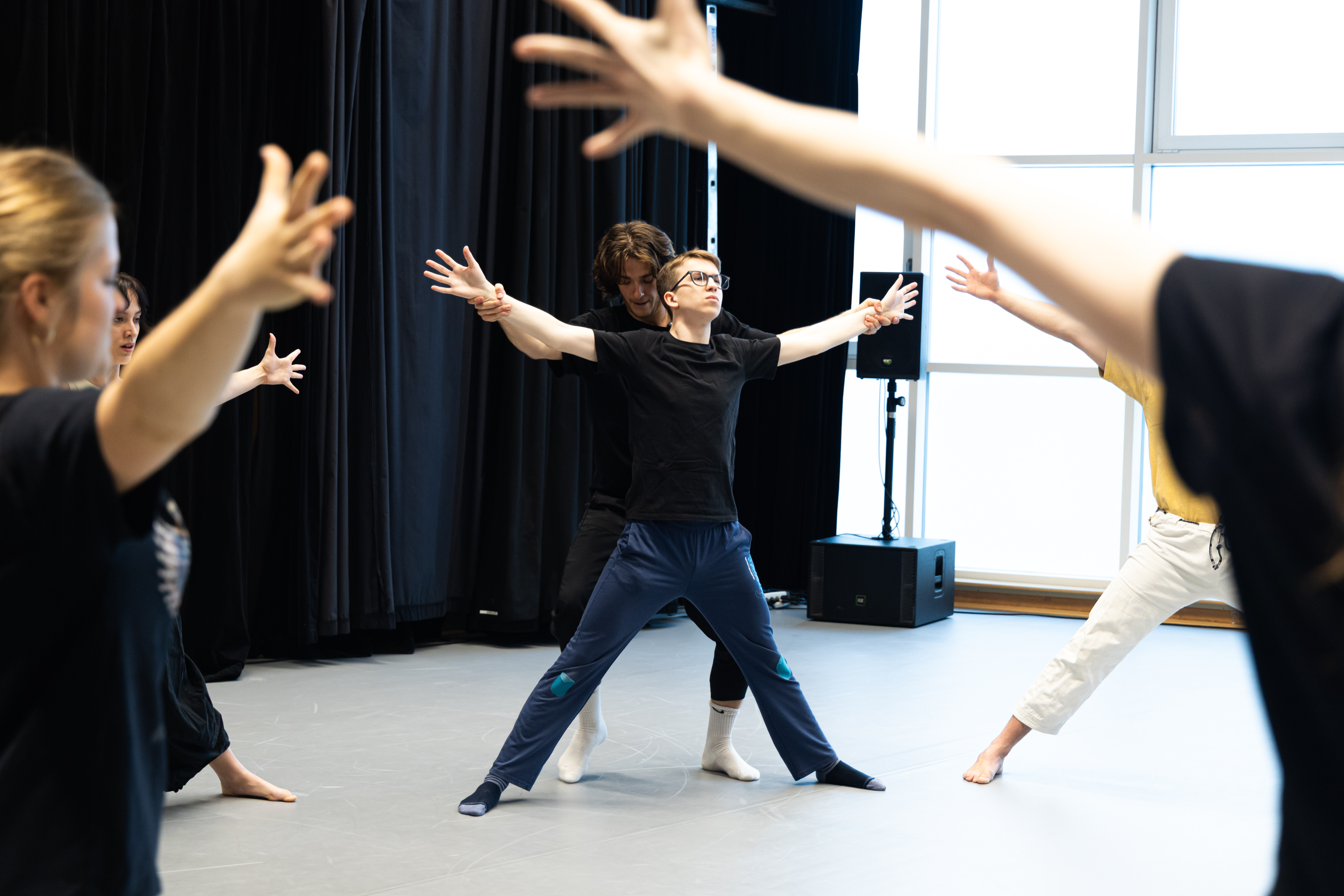
The focus then shifts from Poland to the Russian school, specifically to the practices of Michail Chekhov. The participants work with two extreme physical and energetic states. First, expansion:
“Become a Phoenix. I am a hero, f*ck you!”
They stand with their legs wide apart and arms stretched out. Energy flows through the entire body. From the feet, through the torso, up to the crown of the head and the fingertips. This is followed by the opposite gesture, contraction: the body gradually shrinks down to the size of an atom.
“I don’t wanna be in this world…f*ck those people.”
The body contracts to the point of almost complete stillness, and the energy in the space shifts from something open and powerful to something closed and minimal.
“The voice helps you. It's your friend.”
Are you learning a new language right now?
“I don’t have time for anything right now. So I’m happy when I get to read something in English or French.”
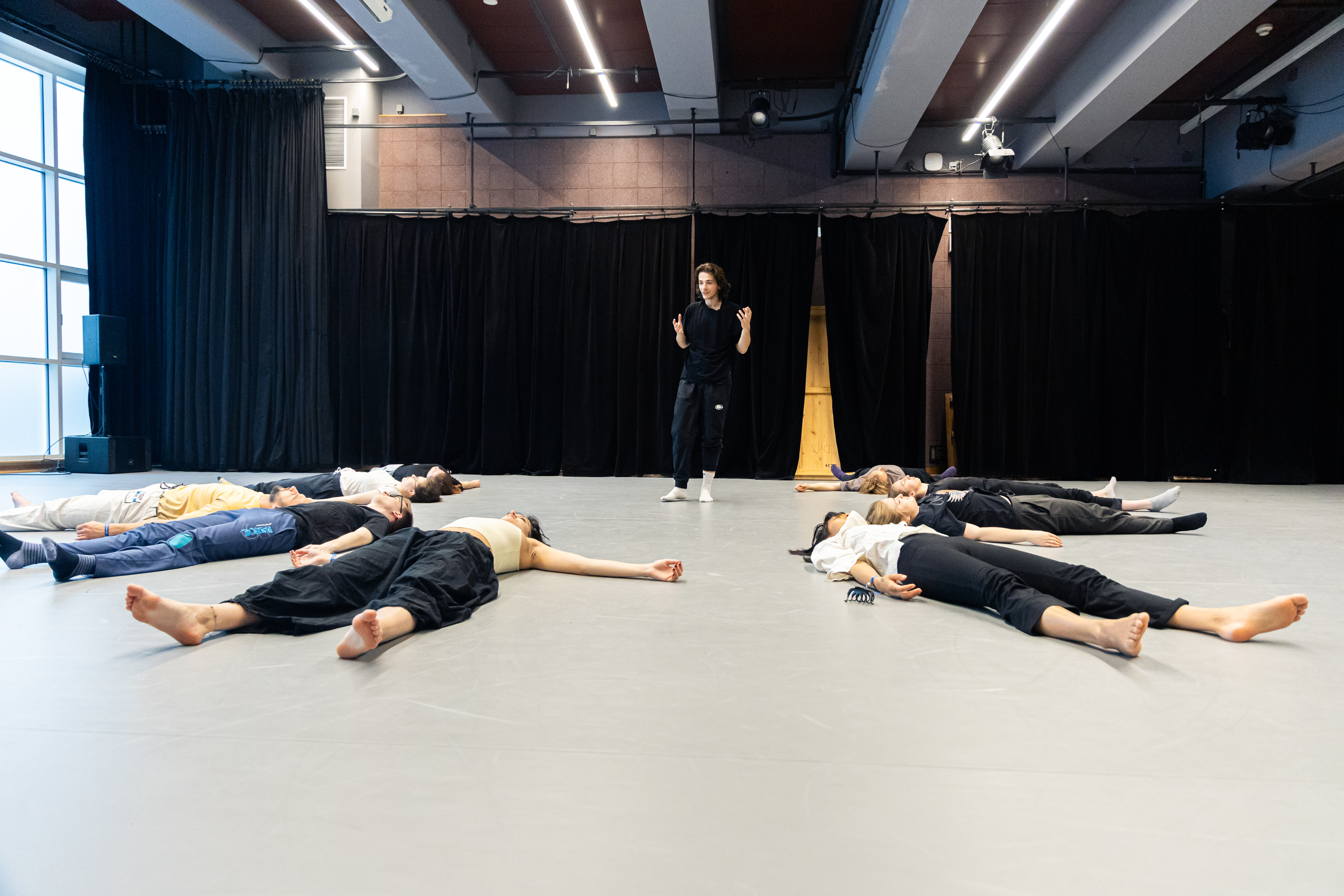
After the physically intense part, a moment of calm follows. The participants lie down on the floor, and the workshop shifts into a more meditative atmosphere.
“You are alone in this place.”
Following the previous dynamic, space opens up for deeper work with inner experience. The participants gradually return to movement, this time guided by subtler imagery, changing the texture of the floor or moving quietly so as not to wake anyone.
“Bring your body to a full stop.”
“Actors do weird sh*t.”
In the final part, each participant is given one minute for their own creation. Some interact with others, while some remain entirely in their own world.
“You are not performing for us; we are just watching and don't care. You can do nothing at all or everything, and that’s perfectly fine. Just no violence, no breaking furniture, no breaking other people or the living room. And maybe no nudity. If I feel like I'm forcing, I stop immediately.”
This simple situation captures the core principle of the workshop: trust in the actor’s impulse and working without pressure for a result. It shows that the essence lies not in presenting something, but in being fully present in the moment and responding to it. In this openness and apparent simplicity lies the foundation of an authentic acting expression, one that can resonate more strongly than any pre-prepared action.
"This is certainly not the last time I've done this kind of acting workshop. I plan to continue working with actors in the future because I find the idea of helping people unlock their full creative potential truly fascinating. "
The author: Tom Chudoba
The photographer: Věra Tarkowská