ec dysis crisis, mami: When crisis becomes the norm and you don't know where to look first
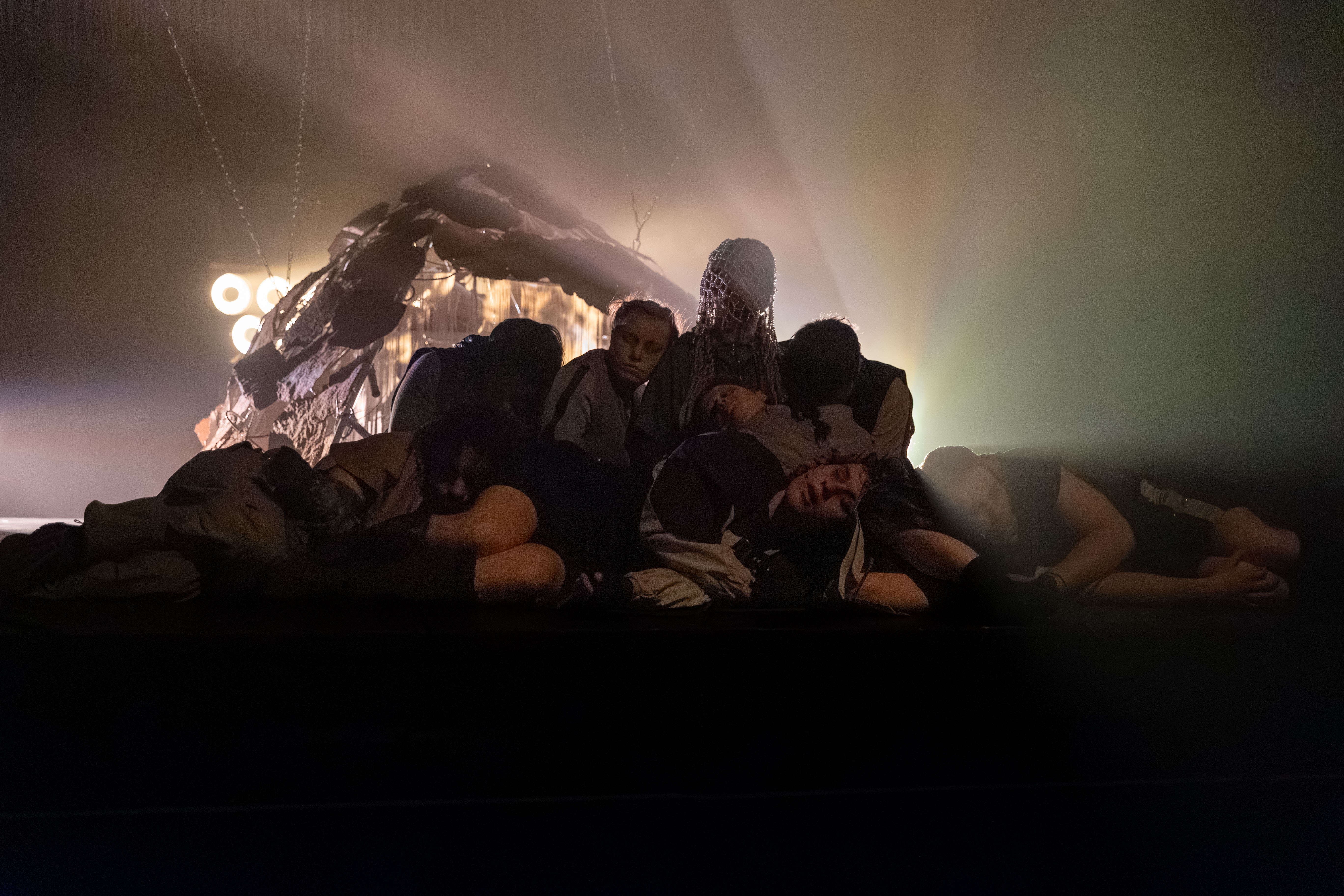
Time has sped up, language is disintegrating, and we are constantly chasing after something. The immersive production ec dysis crisis, mami by a student theatre company from the Janáček Academy of Performing Arts abandons traditional theatrical comfort, plunging the audience straight into the vortex of generational burnout and performance pressure. What is it like to find oneself in a space that, instead of an escape from reality, offers a raw and tangible reflection of our own everyday crisis?
A proper "good morning" shrinks to a rushed "mornin", and " what's up" to a clipped "sup". Time has accelerated, and language is slowly but surely falling apart right along with it. We are all rushing... aftersomething. After someone. And even though we have absolutely no idea where or why, we run all the faster. "I didn't sleep. I was overthinking, then I fell asleep, and when I woke up, I couldn't remember a thing." Doesthat sound familiar?
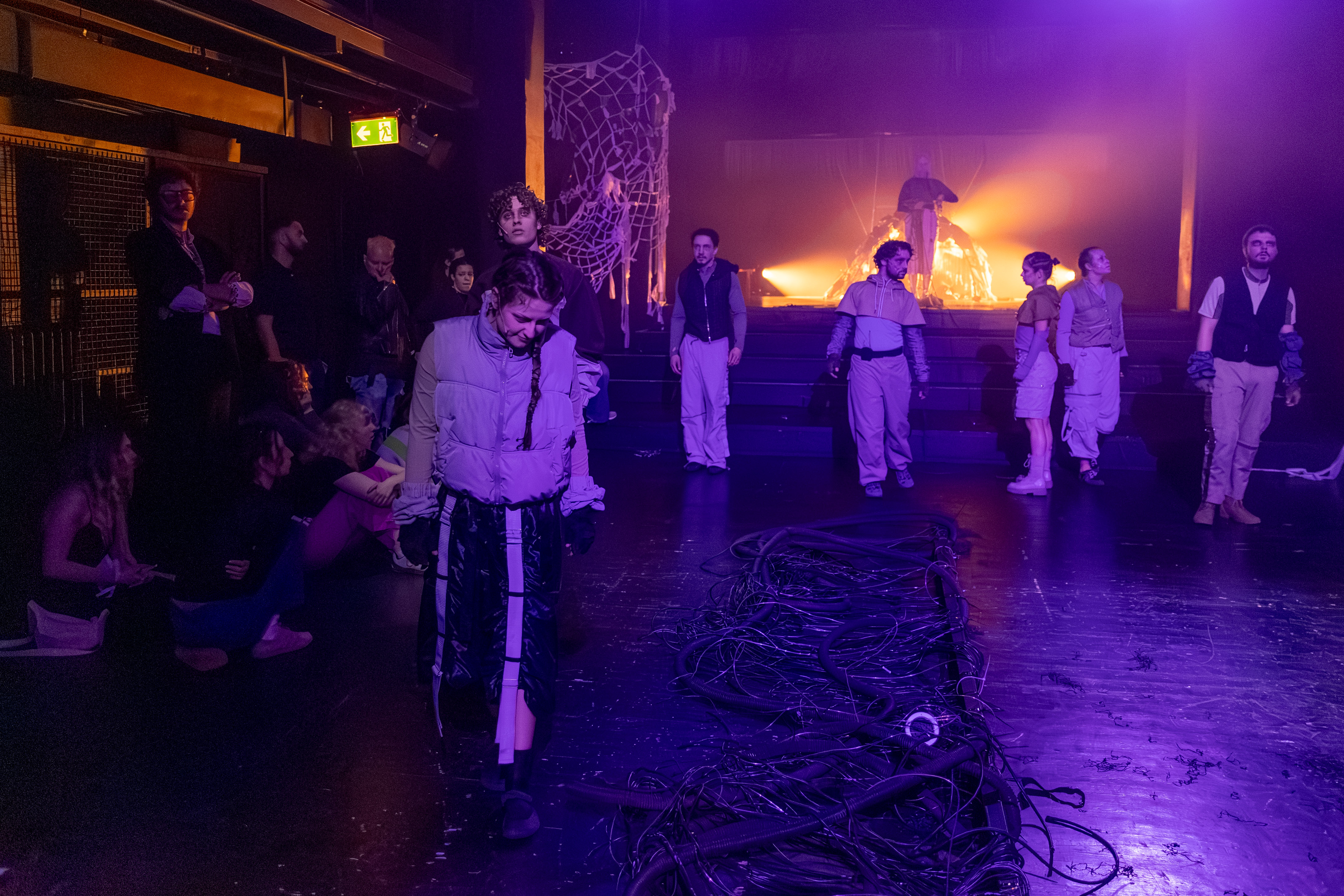
The production of ec dysis crisis, mami isn't the kind of show where you sit in a plush velvet seat and dutifully wait for the curtain to fall. In fact, there are no seats at all. The space becomes a map of chaos. You'll find Niagara Falls, the Bermuda Triangle, and a fully stocked open bar in the foyer at your disposal. For quiet observers seeking a momentary refuge from the surrounding pressure, ordinary benches are set up to serve as a safe space.
The very immersive format of the theatre, which allows you to roam freely throughout the hall and foyer, keeps you constantly on your toes. You don't know where to look first. Actors dart past you, and snatches ofdialogue echo from different corners. This deliberate deconstruction of the spectator experience mirrors thefragmentation of our existence in the outside world.
Generation Z(oned out)
On stage, or rather, within that blurred space enveloping you from all sides, a question resonates: Whatexactly is the norm? Why has the life we live ceased to be normal? A generation raised on the illusion that"when I was born, the world was still fine" suddenly finds itself stumbling through a reality where itsinnocent vision of adulthood has hit a brick wall. Children have turned into adults burdened with problemsthey never asked for.
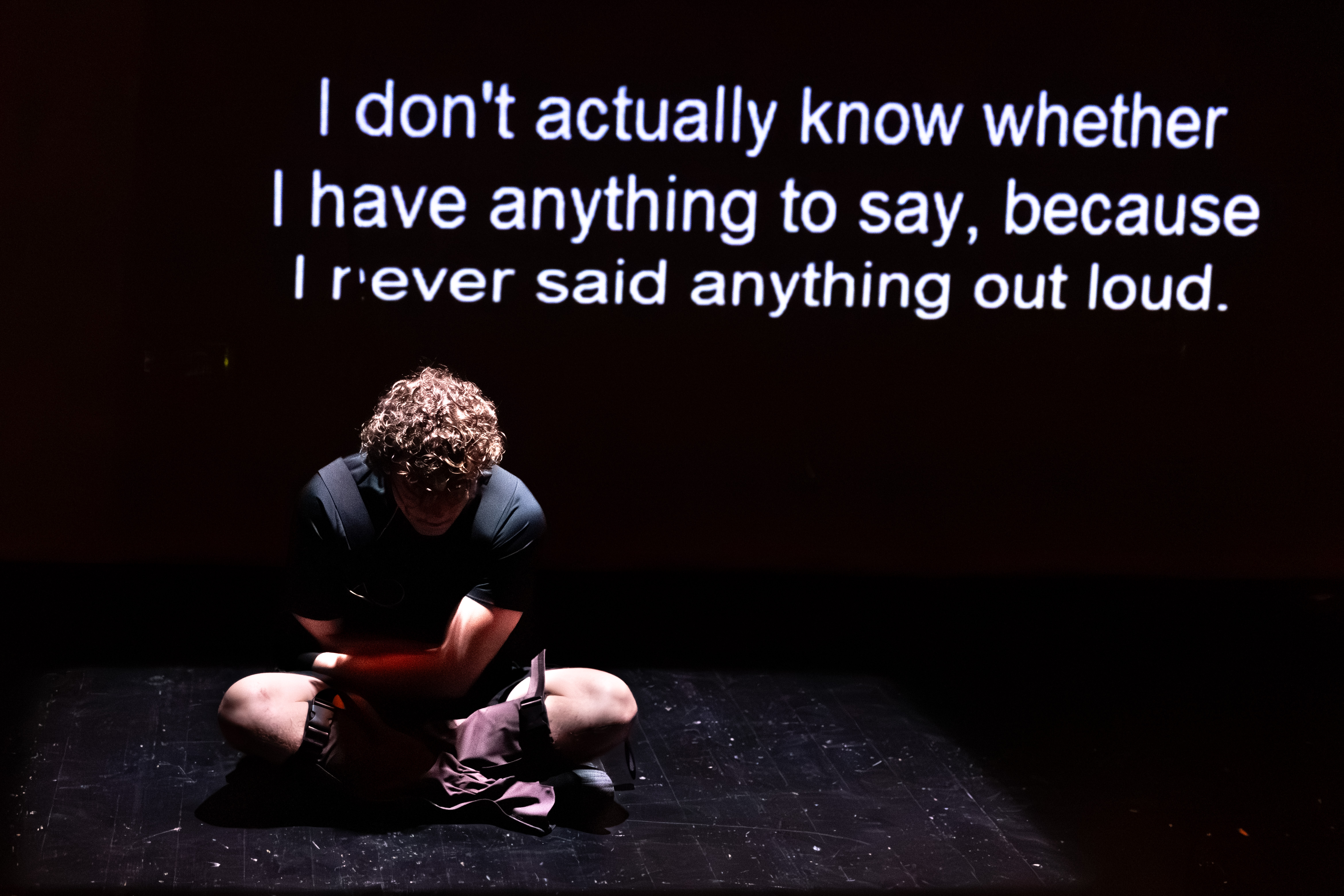
The characters wandering past share their anxieties, and it’s perhaps all too easy to see ourselves in them. A man convinced that, compared to others, he essentially has nothing to offer. Or Rebeka. A girl whose mothergave her that name to make her feel "more cosmopolitan". However, therapy revealed that the name shethoroughly resents—preferring to go by Marie—is merely a proxy issue. The real problem lies deep in her chest. Even so, it's all her mother's fault.
And what about the gaze of others? In this world, it proves to be highly infectious. All it takes is for someonein a corner of the room to start quietly humming Happy Birthday. The melody ripples through the space, alleyes fixate on you, and suddenly, you are instantly expected to feel joy. Does being watched make youuncomfortable? Tough luck. Because society is watching.
Zombies walking to the rhythm of burnout
The production strikes hardest at toxic productivity and the empty mantras of modern capitalism. In these moments, the show's soundtrack shifts into a relentless beat. "The more you do, the more you have. You do nothing, you get nothing." Money is supposed to buy freedom, and as we all know: "Look after the pennies, and the pounds will look after themselves". We are constantly being evaluated – from our Instagram metricsto how picture-perfect our relationships are.
Crushed beneath the weight of it all, people turn into "walking zombies." The characters become trapped in a toxic ritual, sounding like a never-ending story that leads nowhere but burnout. A mechanical litany echoesthrough the hall: "Just a minute. Let me check my calendar. Yes! I can make it! I'll sort it out. I'll arrange it. I'm on it. I'd love to. I'll call you. I'll text you." Over and over again. And above it all, cracking like a whip, a voice commands: "Take it, move it, what are you waiting for, why aren't you working."
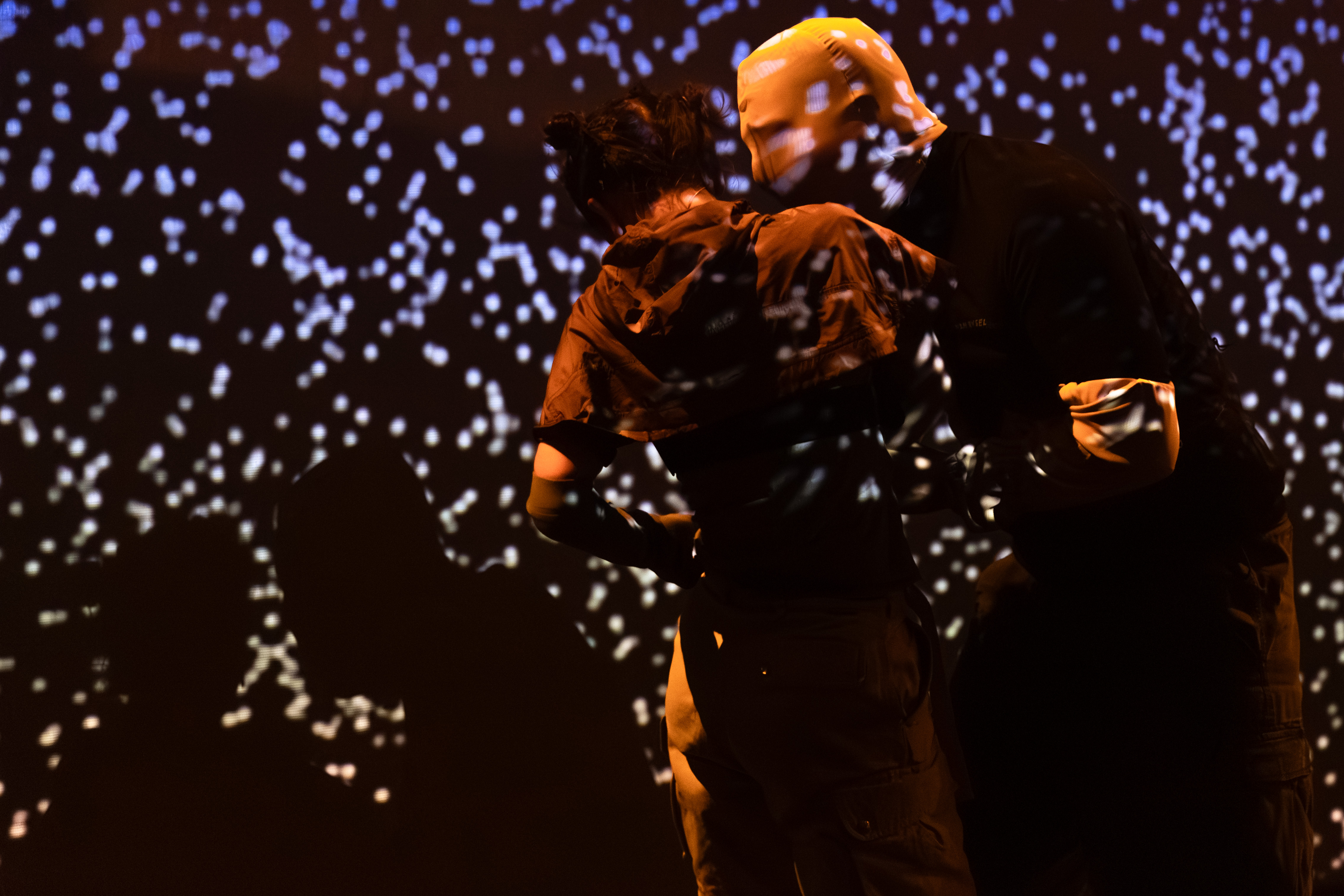
Only one being – perhaps an inner child, perhaps a soul not yet broken by the hustle – watches this ruin in confusion. It tries to awaken and liberate these empty shells. It cannot comprehend what has happened to their humanity. Yet, the demon of life's burdens relentlessly drags it back down. Is it even possible to escapesuch clutches, or is there nothing left to do but surrender?
"When your crisis hits you… GOOD LUCK!"
So, what exactly is this crisis we've been talking about all along? Is it the personal failure of an individual, orone massive generational collapse? An epidemic of loneliness in an overcrowded world?
ec dysis crisis, mami does not seek easy answers, because in a senseless era, that ceased to function long ago. Instead, it pulls you into an immersive, auditory, and visual world, leaving you to try and feel out thoseanswers for yourself.
The author: Aneta Zákoutská
The photographer: Darek Hoffmann