How a simple line becomes the character Open scenes – workshop with John Freeman
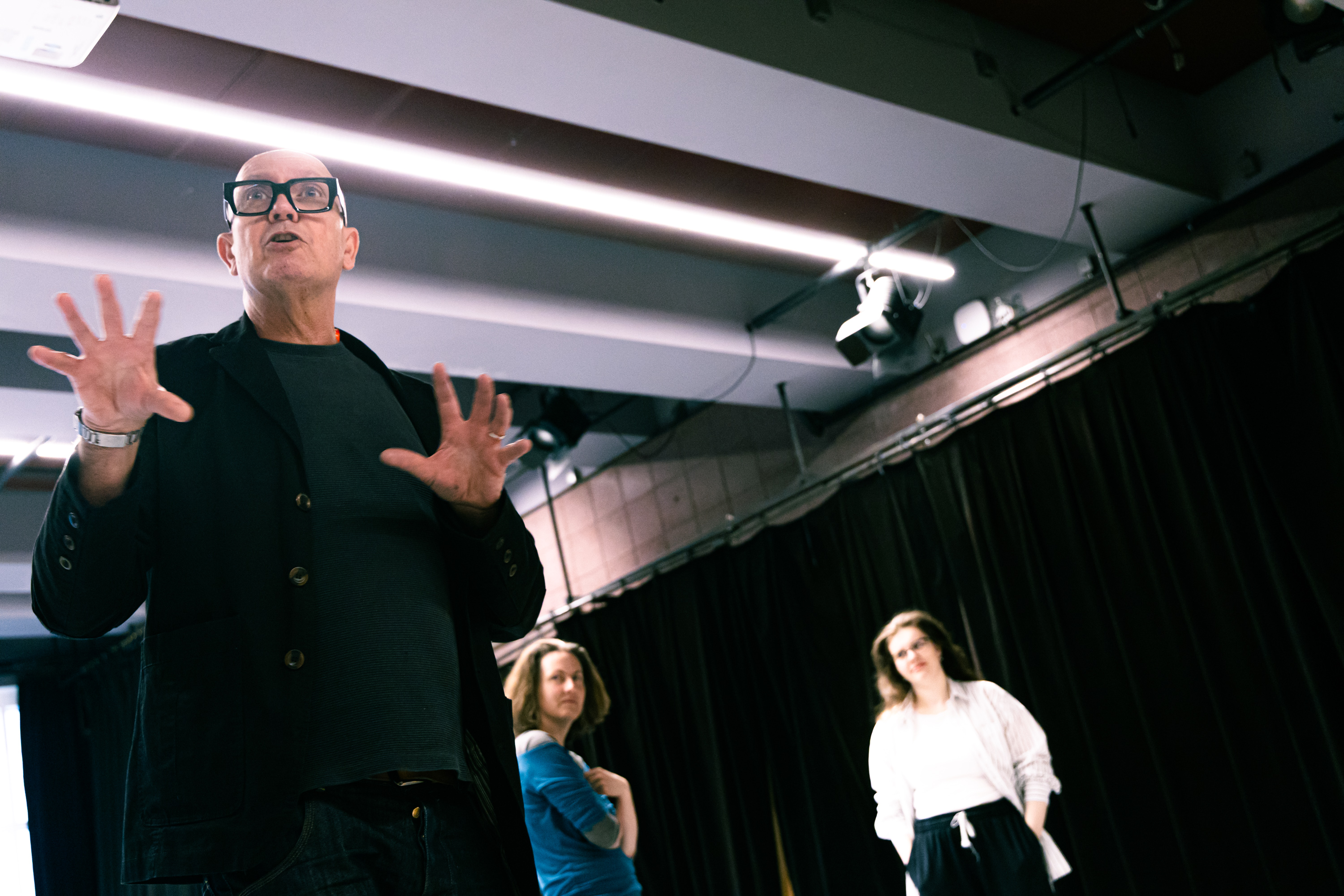
Conversation is like tennis, while theatre is more like an exhibition – we know beforehand where the ball is going to land and how we’re going to return it. How do we convince the audience then, that a match is really being played? We went over some basic exercises with John Freeman as part of his workshop to at least try to answer this question.
You can’t see – you have a scarf over your eyes. You need to catch the person who’s trying to find a way around you, who’s trying to slip right under your fingers. Their eyesight is also taken away. Every creak of the floor counts, and every breath could give them away. Are they going to crawl? Are they going to be tiptoeing around you? And what about when you get your eyesight back? How will you find them? And how will they escape you? Even the slightest movement can give away which way to go and which way to not go, or which path the person in front of you might choose. Before you even realise it, you’re in the middle of a dance without a clue where it will end. You react to every gesture. You’re playing tennis.
How many times does an actor hear on stage: “Give it more energy!”? But what does this mean exactly? “Energy is how much we want something” is John Freeman’s answer to his own question. Every one of the participants is then instructed to bring a random object into a circle we create. We’re sitting next to each other with the task of convincing the person on our left to give us their object. What could convince them? Should I be annoying until the other person gives in? Should I try to get as much attention as possible? We can’t touch each other, so everyone is yelling at each other. A few minutes later this barrier is gone – we can touch the person next to us. All strategies change. Should I simply jump onto the person next to me? Where is the limit of what I can do? Can I poke a finger into their ear? I need to force the person on my left to at least look at me, and on the other hand I can’t even glance to my right! And what will happen when we can simply take the object without the other’s consent? We start to wrestle a little. We all know what we want, and we’re all trying to get it. We’re all concentrating on the goal of our character and therefore on what we might call energy.
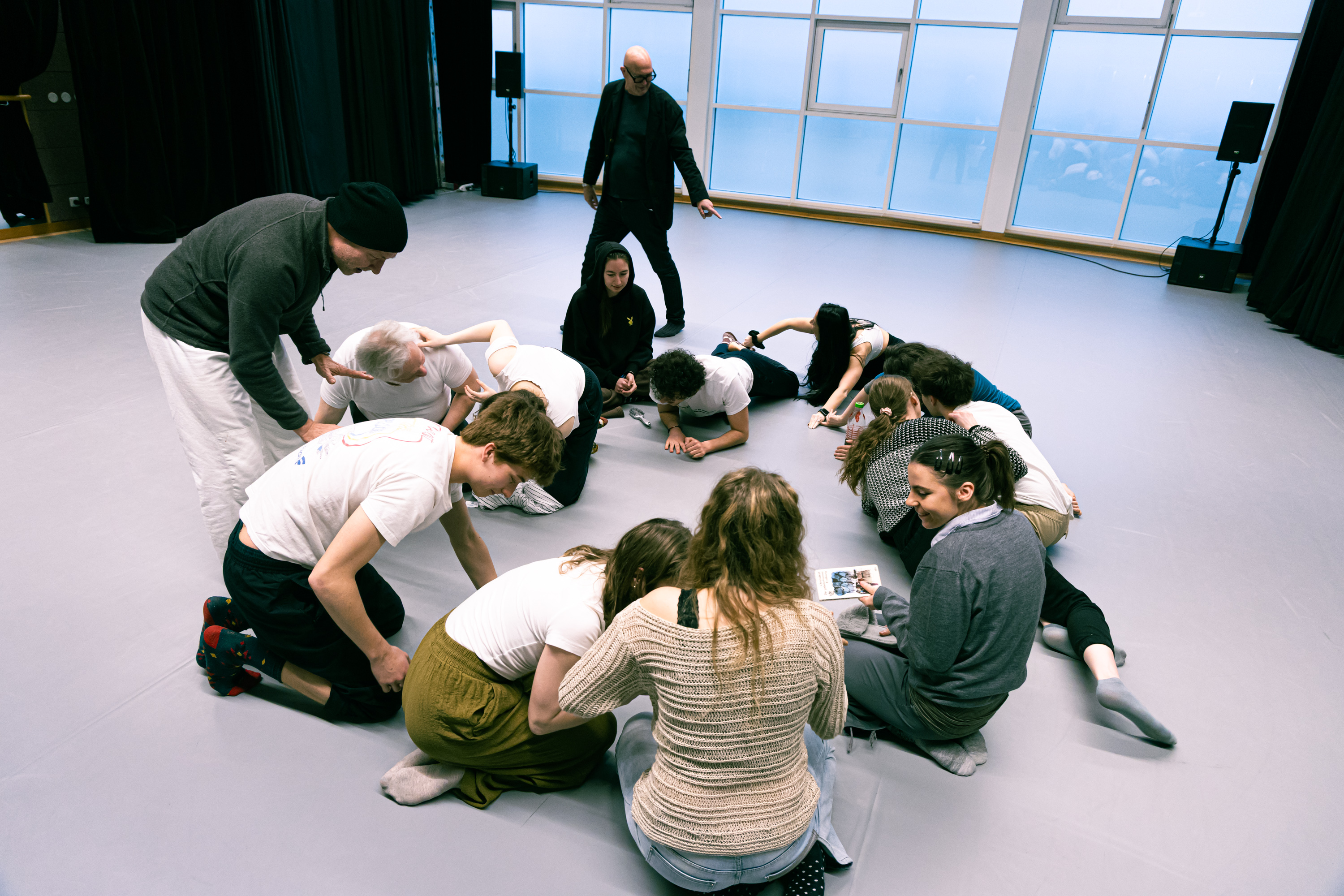
Then we can start to read simple lines.
“Don’t you think it’s time we went to bed?”
“I don’t know.”
“I think we should.”
“Ok.”
Simple words, but what can we find behind them? Is it seduction? Or parents’ worry for a child? A pair of volunteers create the scene while others try to find the meaning along with them. We’ve reached our first real open scene. We go through the scene together and find the meaning of the characters together. Afterwards, it is time for us to try the same in pairs. We’re trying to find our own characters. Who am I? Who are you? What is the relationship between us? Why are we here right now and why are we discussing this? We choose a few simple lines in pairs and try to think of them in context. The audience is only going to see a short snippet of the character, but we have to get to know them much better. Why am I asking you this? Why am I saying this? What should I say next? Suddenly we’re in a hairdresser’s shop, on a walk or in a household, in a network of relationships we can glimpse at. If we don’t believe in some lines, we simply say “No.”
“It’s actually a display of mercy to say no. By that we don’t mean to say the line better, we just mean to say it some other way.”
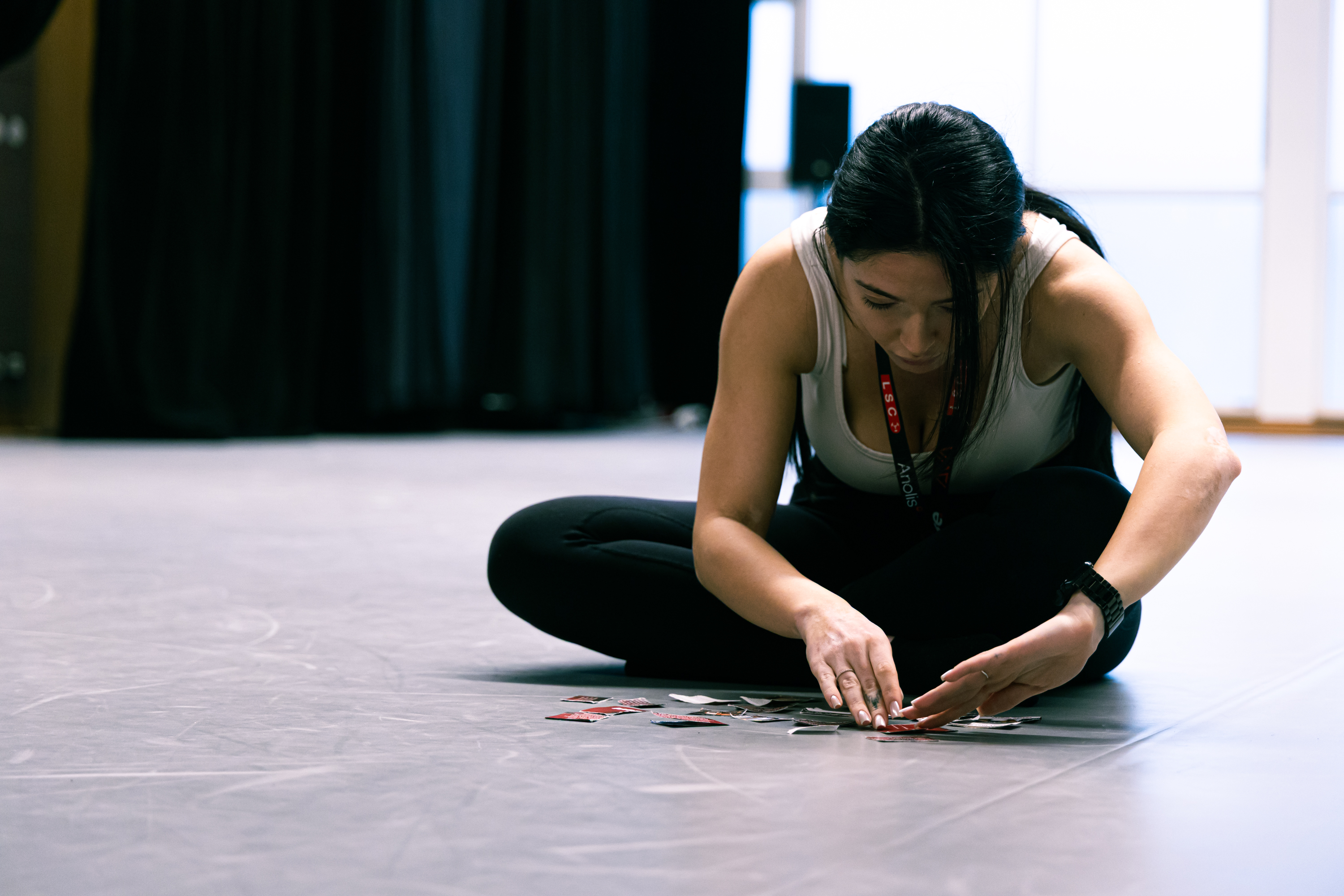
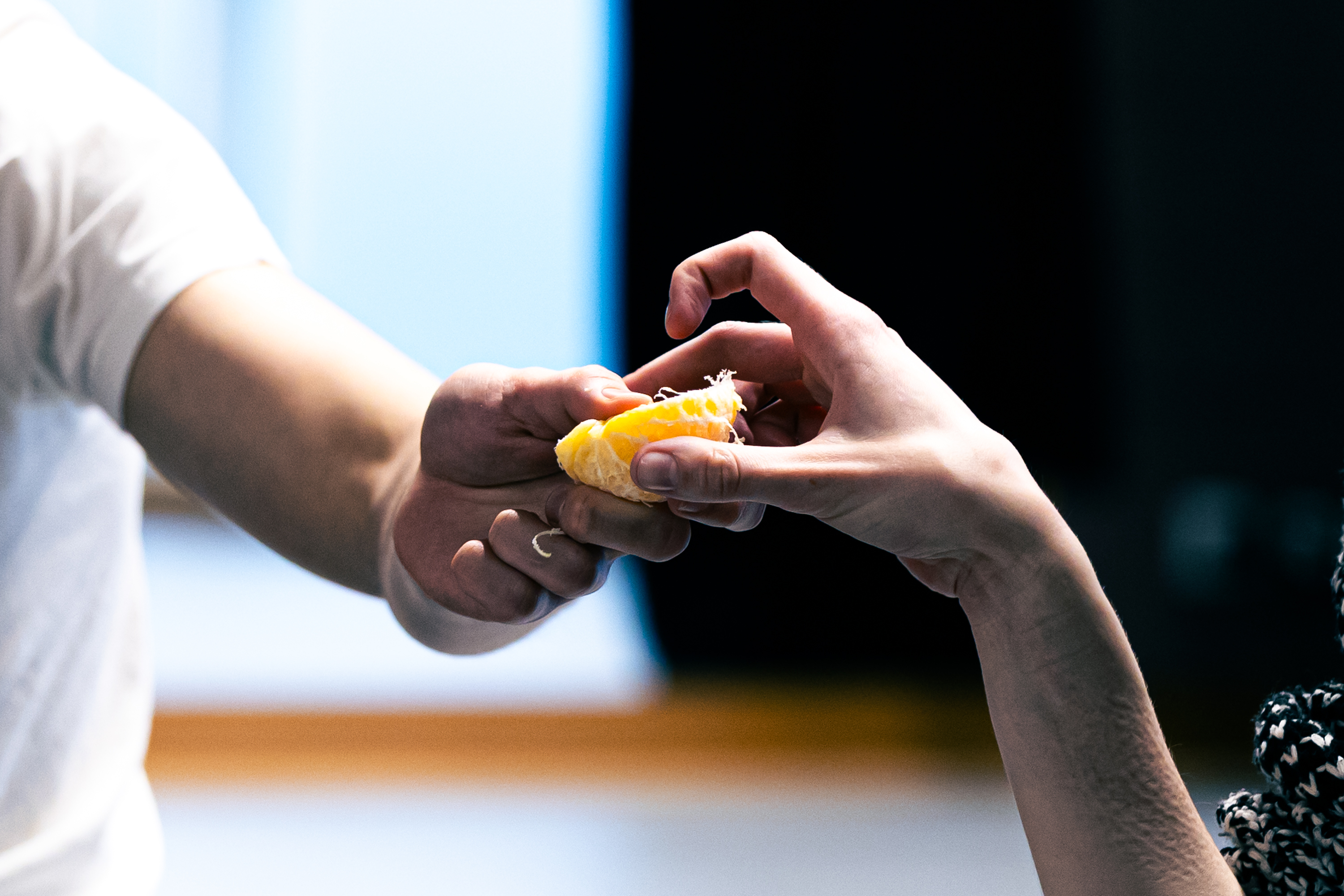
Every scene is repeated by the pair at least twice – sometimes the scene is identical, sometimes we get an added task – to put together pieces of torn-up paper, to eat a banana or an orange, or let the scene evolve on its own. We’re looking for authenticity in our exhibition and we find it in simple activities like eating. “You can’t play that you’re eating. You just are.”
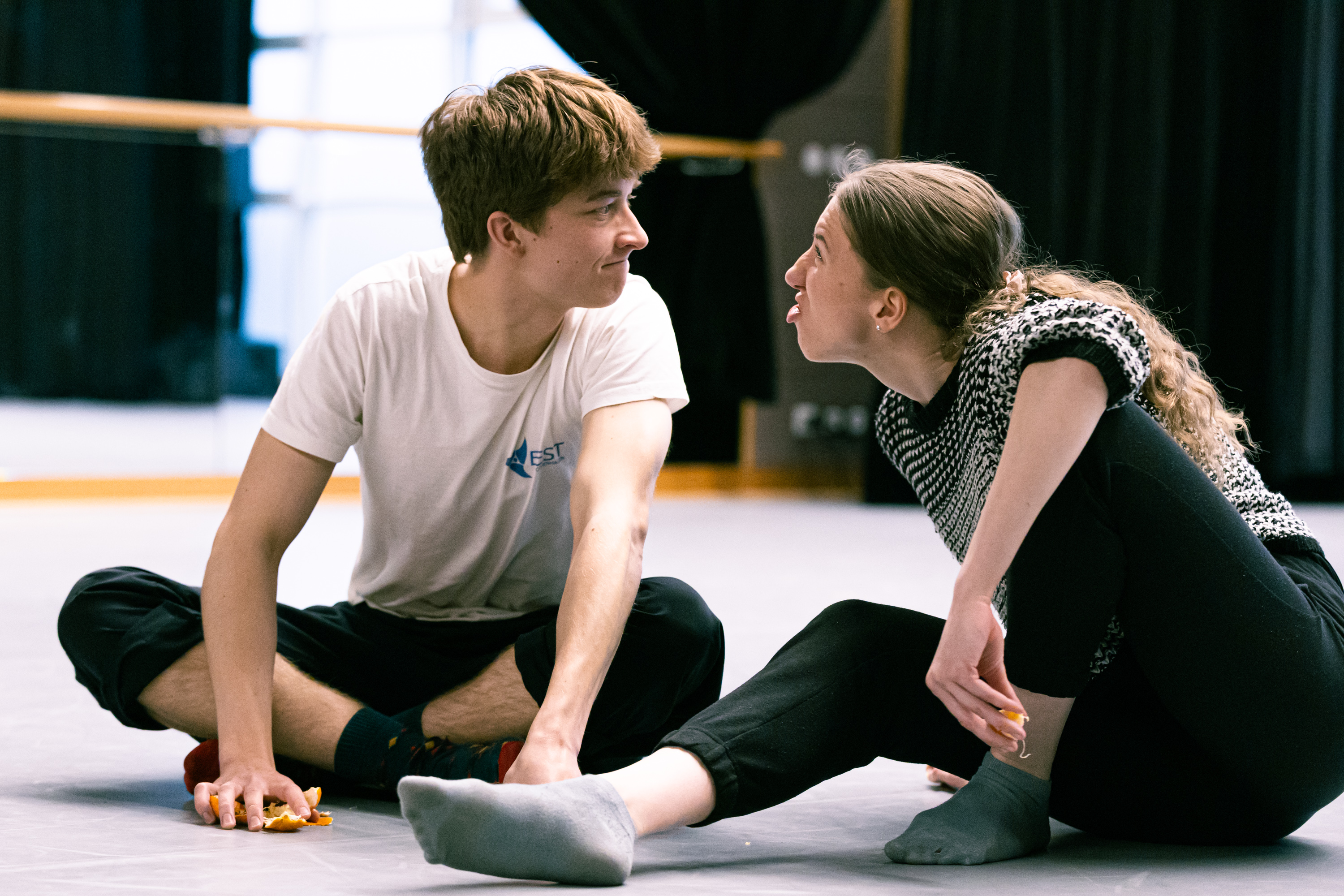
In the extended part of the workshop, we work with repetition and Meisner’s technique. Where will a simple sentence “You have nice eyes,” take us, if we repeat it again and again? We change a word here and there or the intonation, and step bystep we change the meaning. You have nice eyes. You have nice eyes. You have nice eyes. You have nice eyes. I have nice eyes? We change the lines a few more times before we add movement to the exercise. Am I going to get closer to the person in front of me? Am I going to get farther away? What should I do if they start getting closer? We watch each other and try to feel each other's presence. What does the line mean if my movement contradicts it? Several pairs take turns. Are they going to end up next to each other, hugging, or on the other side of the room?
It’s an exhibition. We keep saying the same line. And still, it feels like we’re playing tennis. Because even though we know where the ball will land, we don’t know how and what consequences it will have for us. Through our partner, we try to read our next move and get to know our character better. Lines are just the tip of the iceberg of the character we’re trying to discover.
Author: Kamila Jášová
Photo: Věra Tarkowská
Foto: Věra Tarkowská