Ivana Kalová: My goal is to make theatre for everyone
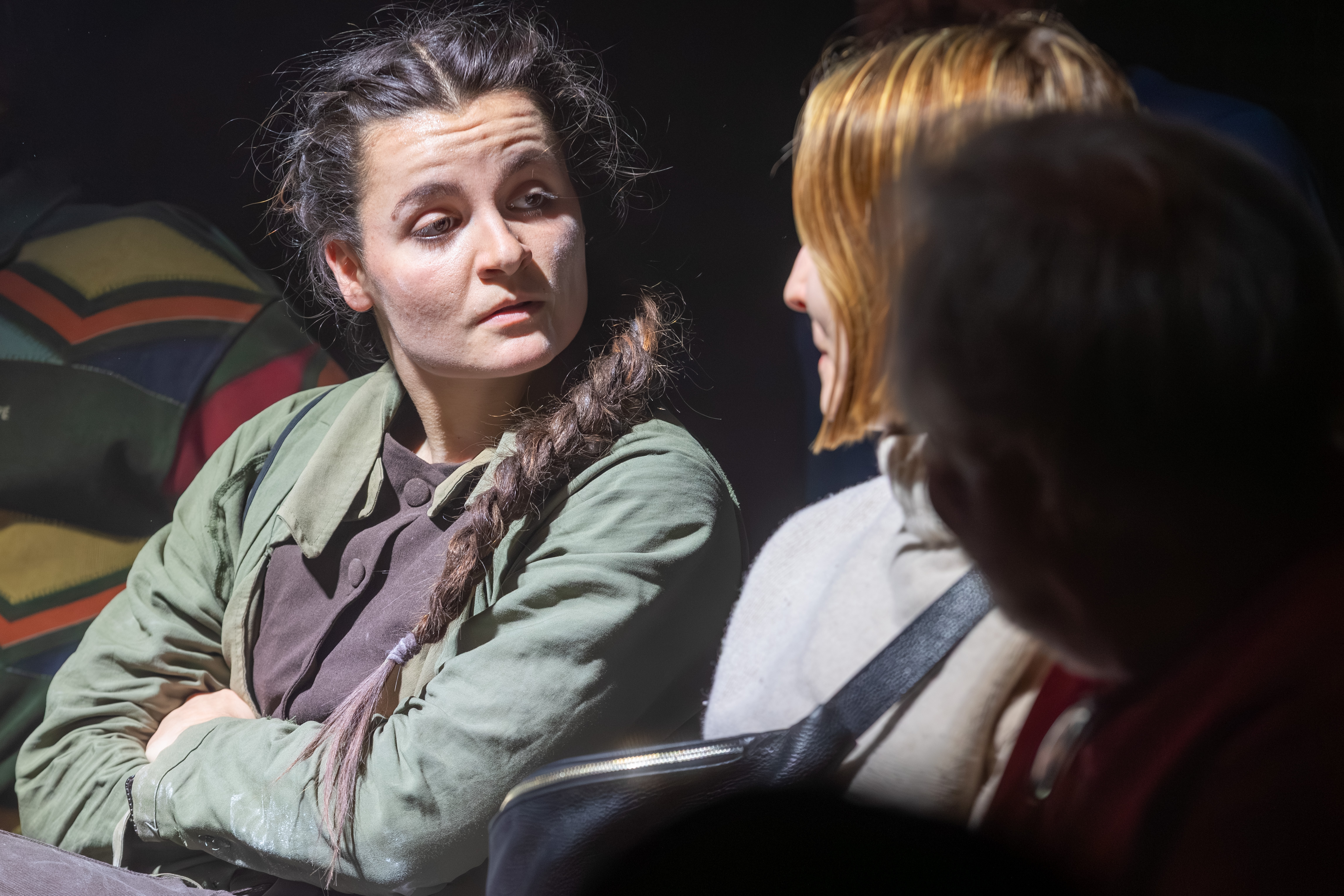
After the performance of WHODUNIT at Studio Marta, we met with Ivana Kalová. A graduate of the Department of Nonverbal Theatre at HAMU, she stands behind the project as both author and performer. We spoke briefly about its creation and development.
How did the creation and rehearsal process unfold? What was key for you – the atmosphere, collaboration with musicians…?
That’s an interesting question. The performance is the result of three years of shaping myself during my studies in Nonverbal Theatre, so it is essentially a graduation piece that will soon mark one year since its premiere.
My goal is to make theatre for all audiences. I don’t want to box myself into some kind of artistic elitism. A detective story is something everyone enjoys. People think about it, discuss it, try to figure things out. At the same time, for me it was an ideal form that I hadn’t really seen explored much in physical theatre and pantomime here. It was a very interesting creative process. Throughout the performance, various clues appear that point to who the murderer is – in my case, a woman, and also a lover, as the story gradually reveals.
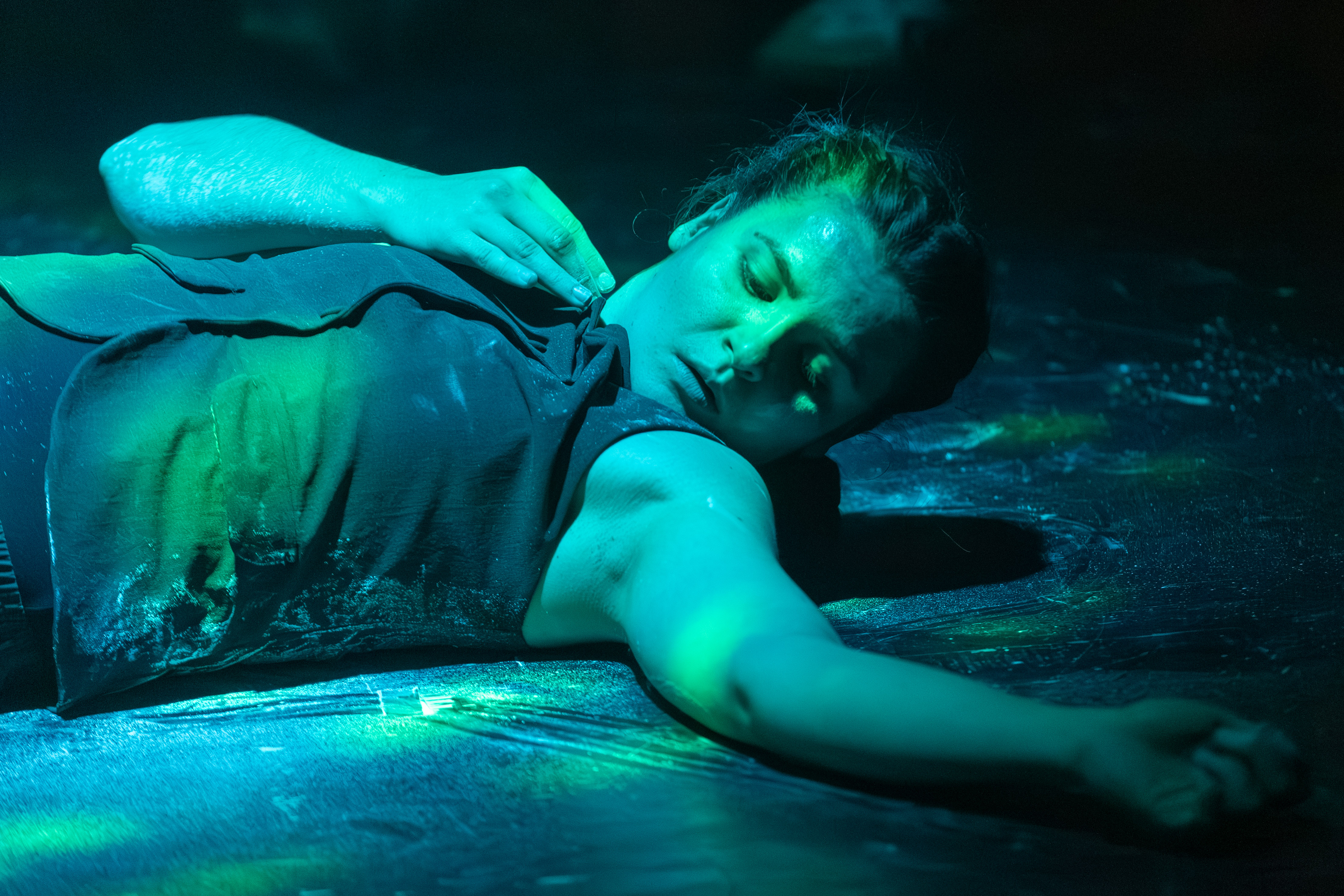
I had about a year to develop the whole piece, and I only brought in the musicians and lighting designer towards the end, about two or three months before the premiere. I wanted live music, specifically vibraphone, played by Petra Brynychová, with sound effects created by Milan Dotlačil. Originally, I planned to add a stringed instrument, but in the end I was most drawn to the sound and melody of the bassoon, which you can hear played by Viktor Sabol. The musicians, as well as my lighting designer Lukáš Klíma, are absolute professionals – they were able to give me exactly what I needed, both musically and visually.
Has anything changed significantly in the production since its premiere almost a year ago?
I feel like the interactive aspect with the audience is evolving more and more, or at least my perspective on it. I still think a lot about how to work with the fourth wall throughout the performance. It’s a question of when to open up to the audience and let them know I’m aware of them, and when to stay fully immersed in the story. I also play the detective a bit differently now than I did at the premiere. Overall, I can see a shift in how I think about building characters.
Do you have any pre-performance ritual? Something you can’t do without?
Yes! Of course, we all wish each other “break a leg” and give each other a little kick. And whenever I hide under the coat before the performance begins, I start tuning into the characters and say a few specific phrases to myself. But I’ll probably keep those to myself. (laughs)
And about the improvisation and interaction with the audience – was any of it pre-arranged?
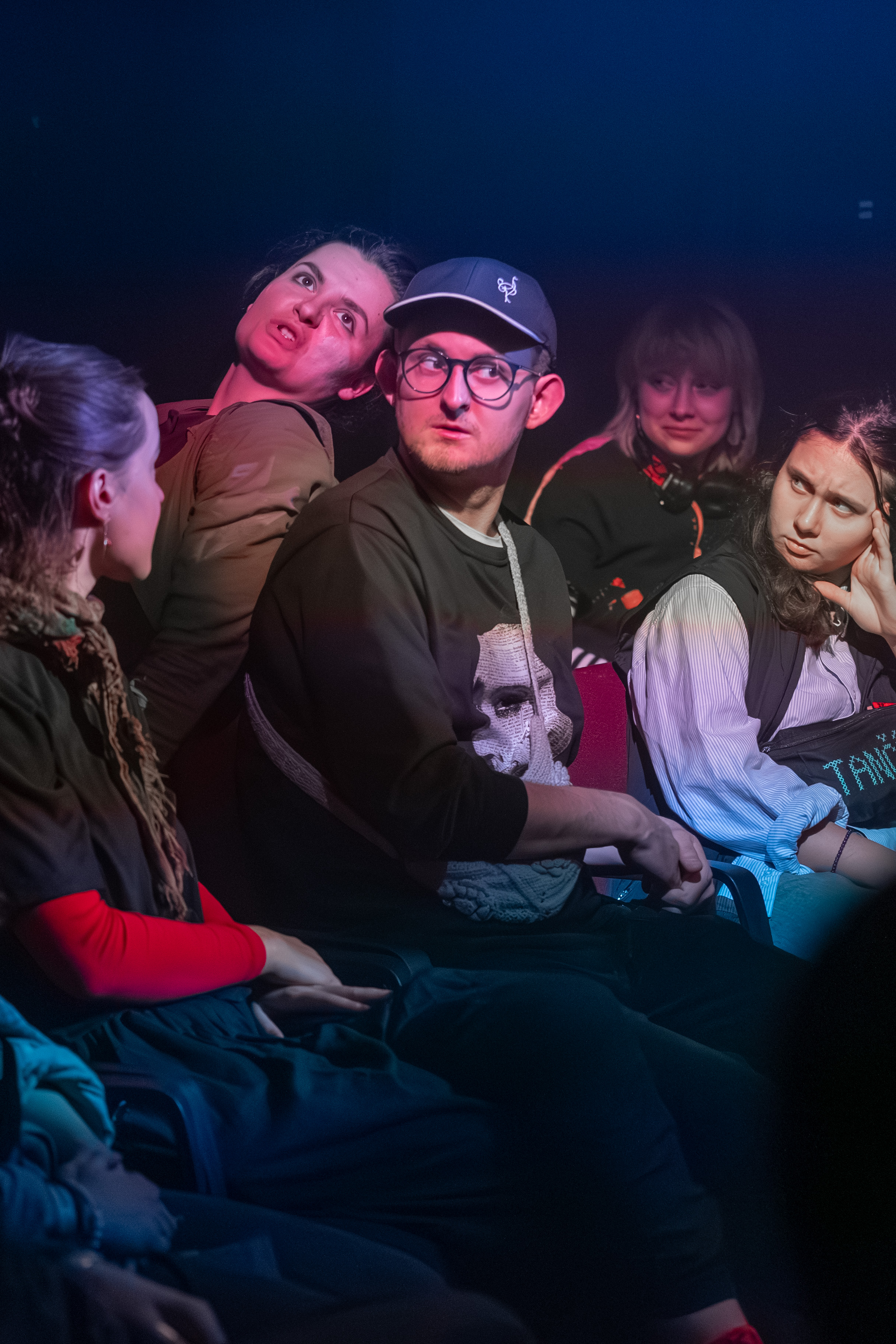
Not at all. I’ve gone through it about eight times now, so I have a sense of where it might go, but everything is based on play. For example, I need someone to give me a thumbprint in my notebook. At first it’s just the thumbprint, which can already be quite funny, since not every spectator immediately understands what I want. Then I ask for the index finger, the ring finger, the little finger, and then again from the thumb, speeding up the tempo, building the situation. Then, once I am in the role of the detective, I suddenly stop, very seriously, and move on to the next suspect. I think the audience enjoys these interactions. And of course, so do I.
At one point I thought that the woman giving the fingerprint might have been planted…
I actually know her, but she had no idea what was going to happen. I don’t really distinguish whether it’s someone I know or not. I approach it the same way every time, and I love situations when the audience doesn’t want to cooperate. That’s when the real, authentic moment happens.
And one last question: Sherlock Holmes or Hercule Poirot?
For me, it’s Columbo. Even though we use iconic music from Sherlock or The Pink Panther. But Columbo will always be number one.
Author: Tomáš Chudoba
Photo: Darek Hoffmann