
Metamorphosis of a Wednesday Night
Wednesday’s Night Circulation at Kabinet MÚZ was not merely a sequence of three concerts, but the transformation of a single collective body. From clusters of people gathered outside the entrance to the crowd’s final dispersal, the festival night took shape, gained momentum, and faded away to its own rhythm.
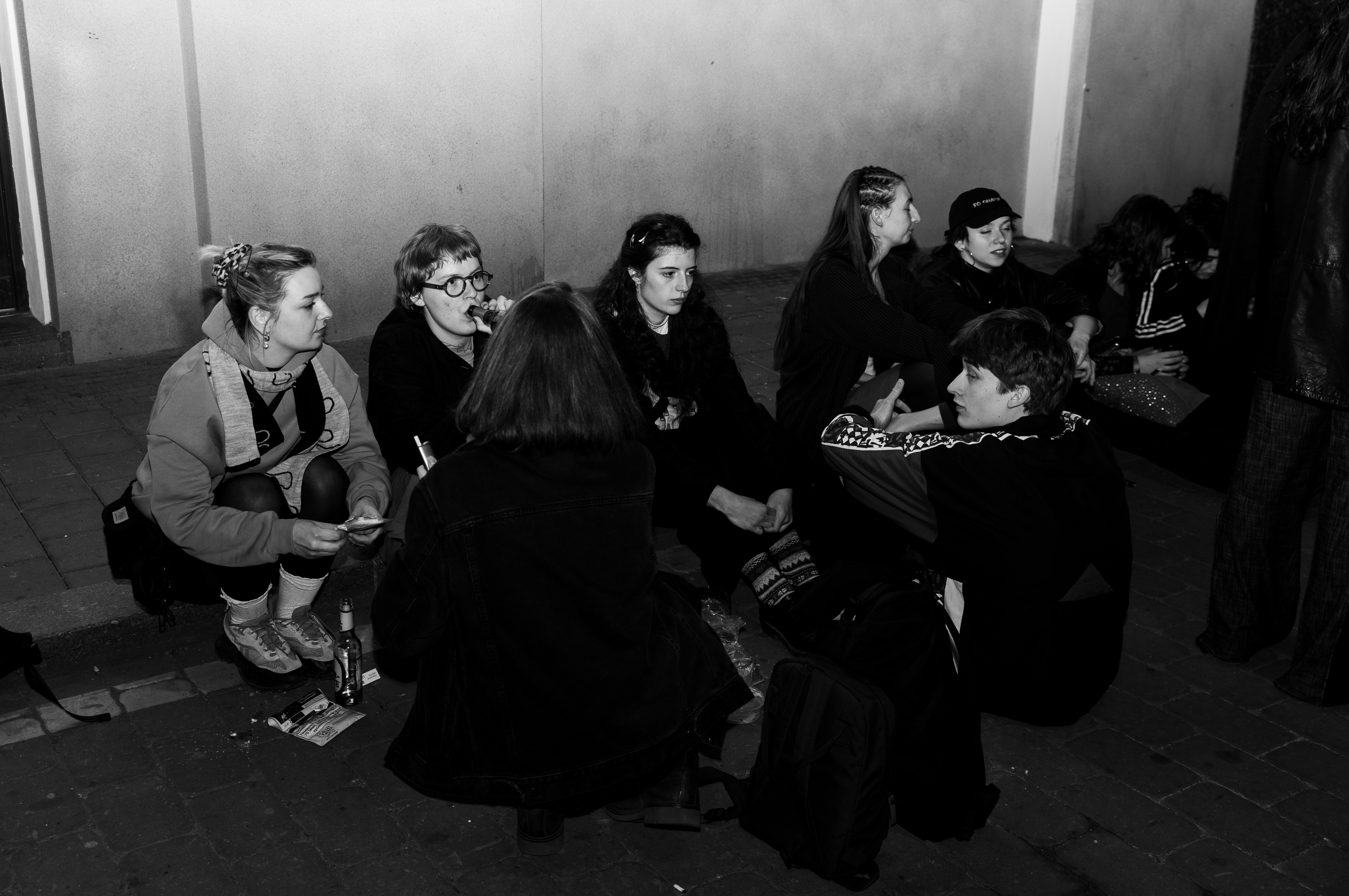
It is half past seven in the evening, and all roads now lead to Kabinet MÚZ. Even before the club itself comes into view in the fading daylight, clusters of people can already be seen from a distance, waiting to see what Night Circulation has in store for them. Small groups chat, sit on the curb, or smoke by the outdoor bar table. Audience members mingle with the bands right up until the last minute before the doors open for the night. From outside, the bar music is audible just enough to blend in with the surrounding conversations. Some are chatting about the soundcheck, others are sharing the experiences through which Encounter has brought them together. Gradually, an organism begins to take shape – one that belongs to this night alone.
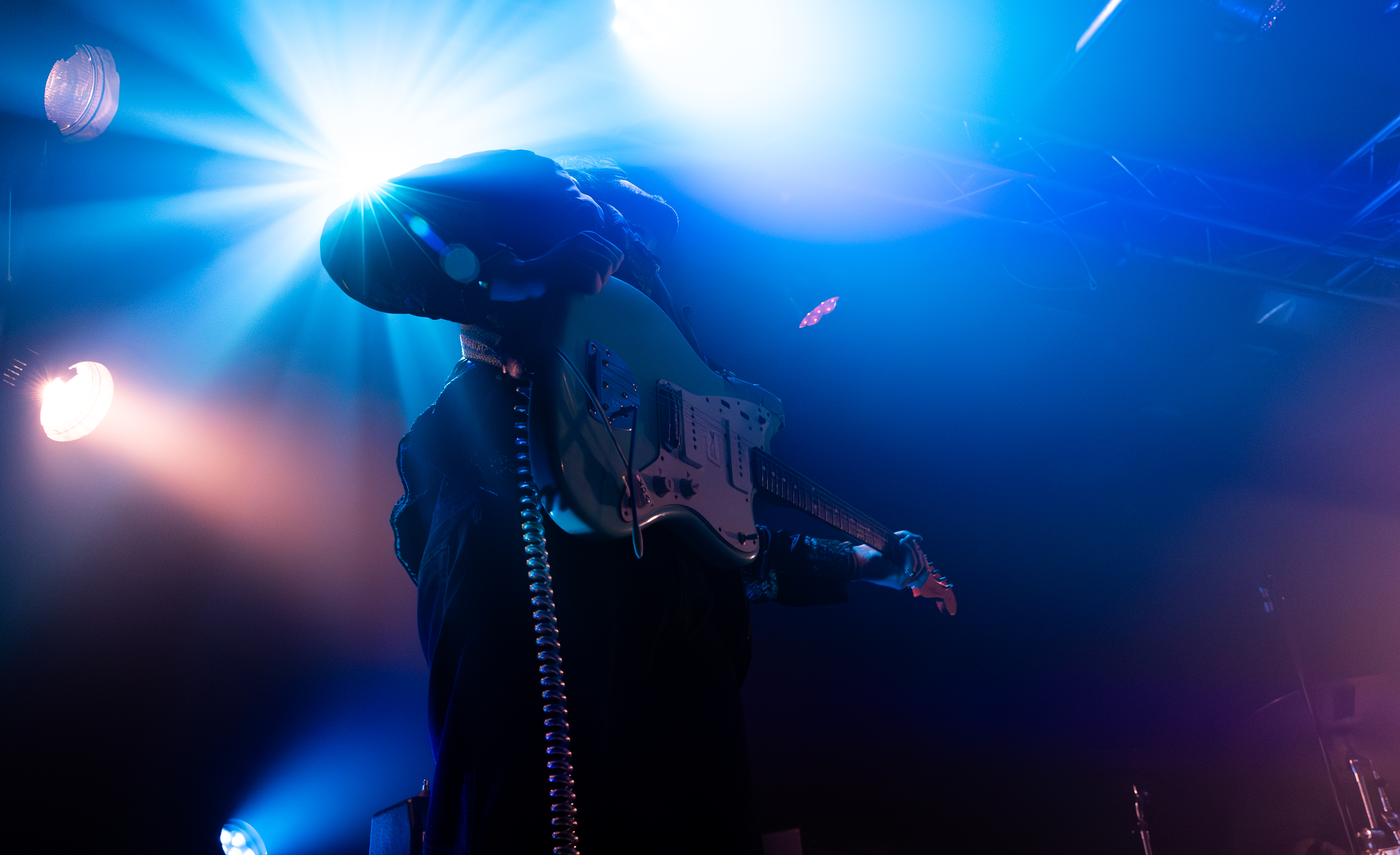
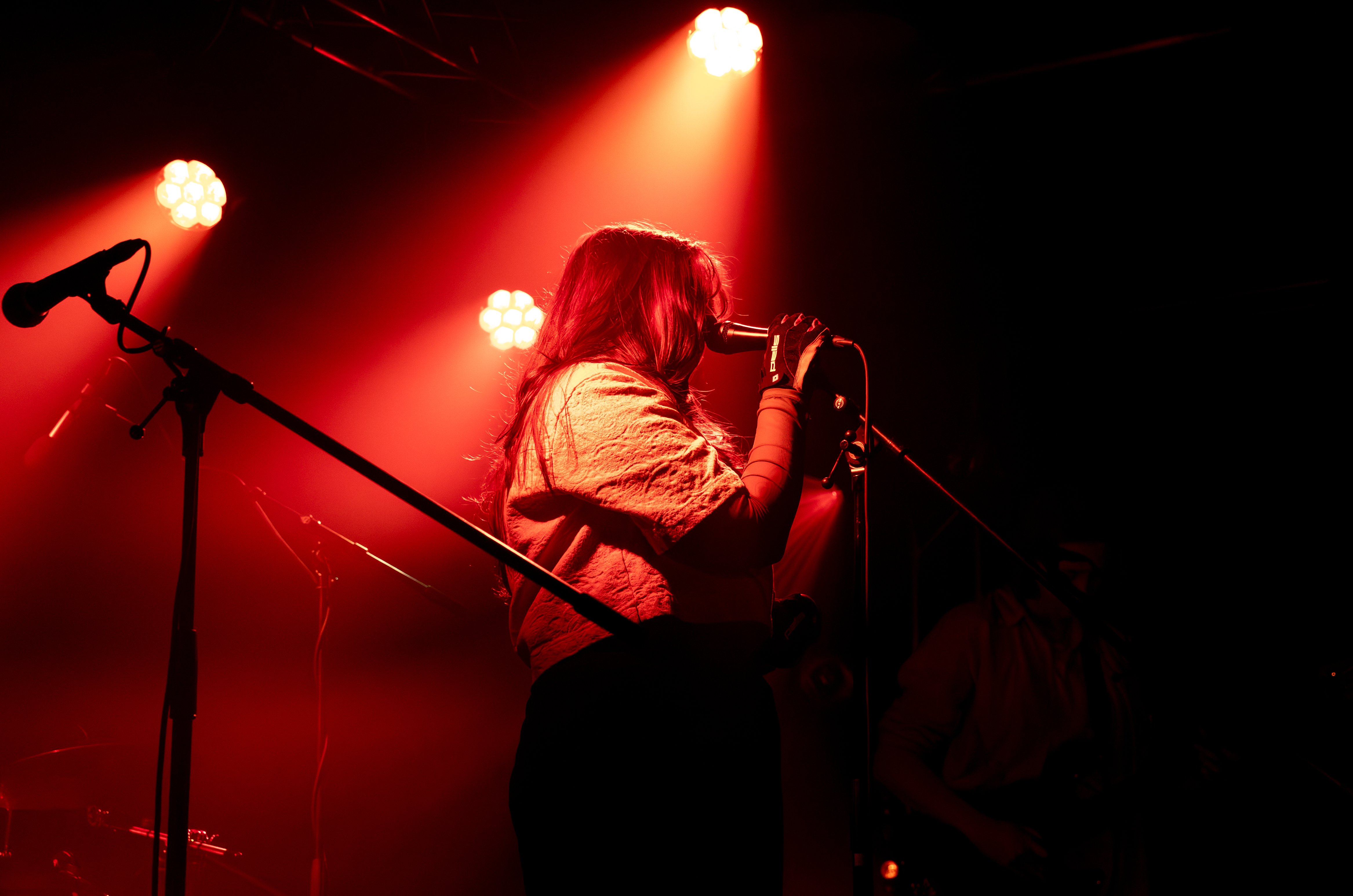
The neon-green entrance to the hall, standing in sharp contrast to the bar’s ambient lighting, feels like a threshold between ordinary life and a world in which this newly formed gathering of people moves to its own rhythm. The audience becomes a network of cells crossing that threshold in order to breathe life into the room. The rock sound of the Prague-based band Hansen is already coursing through people’s bodies, inviting them into a synchronized sway. The doors to this intimate world keep opening every few moments, so the contrasting bustle of the bar still lingers faintly as a reminder that everything is only just beginning. At first, the crowd is hesitant, but after a prompt from the singer, it shifts almost as one from the walls toward the centre of the action. During the faster songs, the lighting dyes the vocalist’s blonde hair red; during the slower ones, blue (yet striking) tones are cast across the audience’s faces. The room fills with different shades of rock, driven by the pure synchronicity of drums, guitar and bass, interwoven with male and female vocals. Even so, the middle of the floor fills only halfway, and some babies are still sitting in the corner even during a track called Maybe Baby, as if waiting for something. After the final song, Selfrespect, a hopeful “One more!” rings out, but the crowd soon moves in unison back toward the bar to catch its breath before the next phase of the nocturnal cycle.
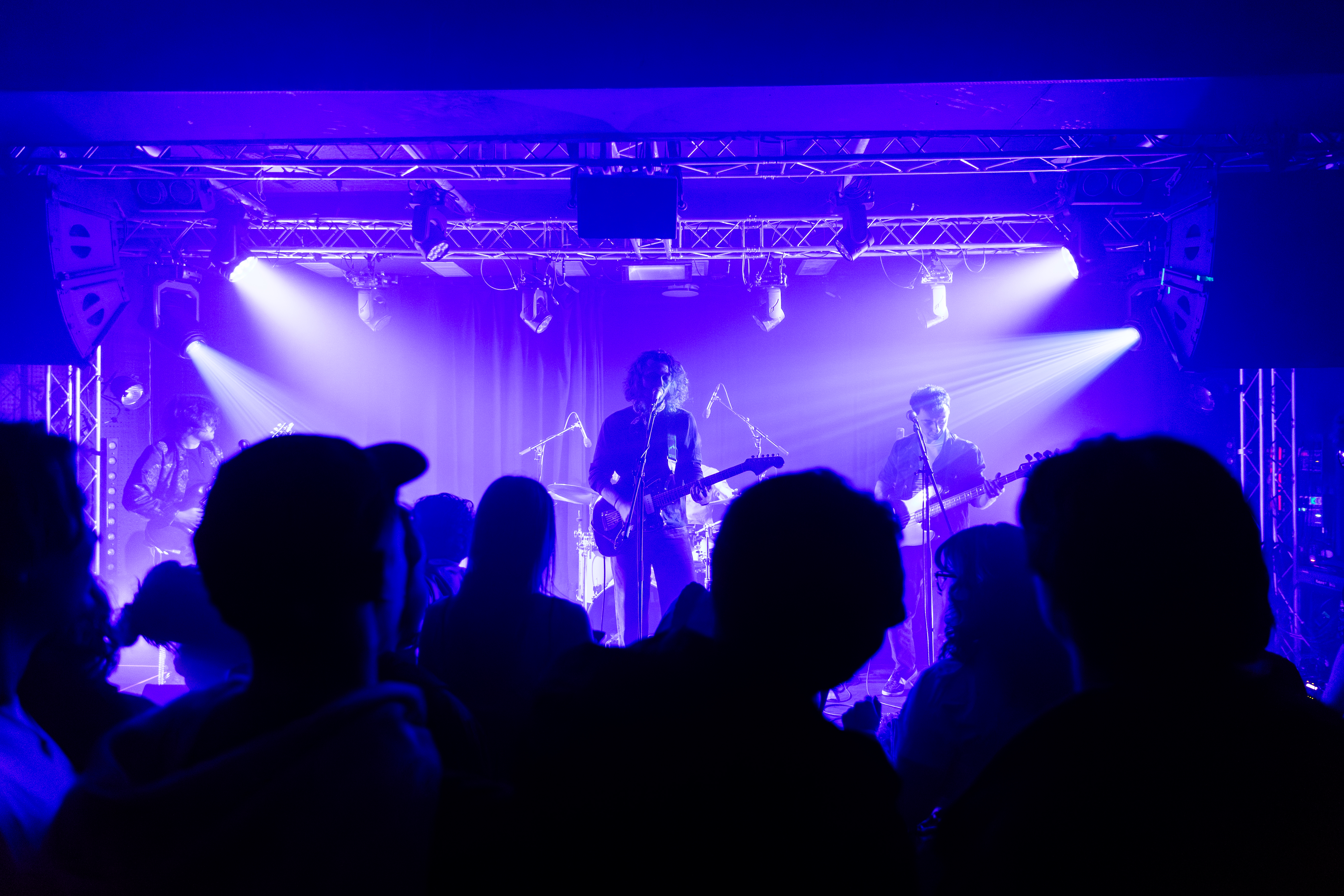
An even larger crowd gathers for the Brno band Serge X. People weave around one another to get back to their spot with a beer in hand, or at least a little closer to the stage. Photographers dart among them, trying to capture every available sensation, thus becoming part of the concert’s own infrastructure. At times, the audience sees the performance through camera viewfinders or through someone else’s phone screen. The floor channels the bass into the bodies of the crowd, while the lighting once again draws them into the stories of the individual songs. Bodies are moving faster now, feet stepping into the light projections on the dance floor, whereas between tracks, the atmosphere loosens slightly and people slip back into conversation. Even so, the thickness of the air makes it clear that things have entered a new, more intense stage. The singer sings, “don’t get tangled up in the seaweed,” then immediately remarks that she herself has become tangled in the microphone cable. At the lyric “it’s sad ’cause it’s funny and it’s funny ’cause it’s true,” loud laughter ripples through the hall, and the set comes to a symbolic close with the post-punk track This Needs to Stop. Small groups once again drift outside and settle onto whatever stretches of curb are still free. Their voices grow louder, standing out against the surrounding noise.
The hall is half-empty when the final band begins setting up their instruments. Midnight Swimmers do not wait for the audience; with a noisy opening, they cut straight through the conversations and restless distractions. Before long, the entire crowd gathered outside is drawn back toward the music. The hall fills up, leaving just enough space to dance. From time to time, people collide in the crowd, hypnotised by the predominantly indie-rock sound. While the earlier bands left a brief pocket of silence between songs and applause, here the cheers come instantly. The floor no longer merely vibrates. It visibly jumps under the force of dancing. The lighting shifts progressively from melancholy reds and pinks into aggressive flashes during the faster parts of the set. In the strobe lights, band and audience disappear and reappear again. The air no longer feels stuffy; now it carries only the trace of e-cigarettes and the mingled scent of sweat. Before eleven o’clock, the whole room is trembling, the tracks blur into one another, and everyone senses that the end is near. For a few seconds, something like a mosh pit forms on the left-hand side of the room, and from the back rows someone shouts, “Unbelievable!” Even just minutes before the end, more people are still arriving in the hope that the band might give in to demands for a second encore. It never comes. The guitars reflect the final rays of stage light, which suddenly give way to ordinary lighting, closer to what awaits in the bar. The crowd slowly begins to dissolve, although some still linger individually in places where shared energy had only moments before been concentrated. They too are eventually driven out by the sound engineers’ electronic music, signalling that it is truly over.
Bands and audience mingle once more, this time no longer with a common purpose. Some head home, others carry on with plans of their own. This group, in exactly this form, will never gather again. The night’s cycle has run its course. The organism that took shape over the span of a few hours comes apart, so that with the next Encounter night, a new one may be born from scratch.
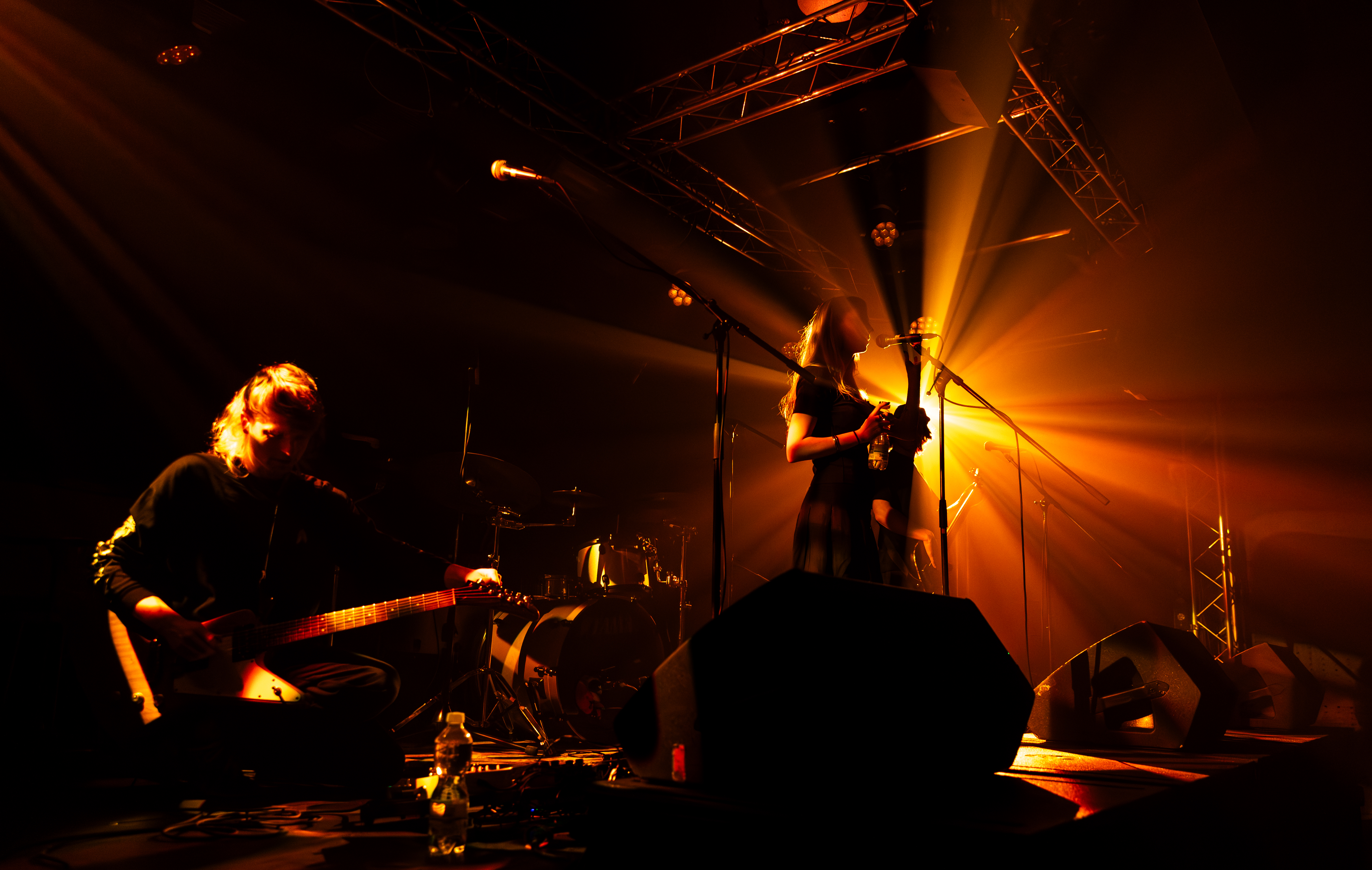
photo: Linda Dobrovolná
The author: Eva Nývltová
The video-maker: Aneta Zákoutská
The photographer: Linda Dobrovolná