Radical Fragility
The Berlin University of the Arts (Universität der Künste Berlin) invites the audience waiting in the foyer of the basement stage at Divadlo Husa na provázku into the intimate space of its production, Co-radical Togetherness.
The dramatic text and the concept of the production emerged as a result of the creators' collective reflections on relationships in the contemporary world. It draws inspiration from the books Radikale Zärtlichkeit (Radical Tenderness) by Seyda Kurt, Was wäre, wenn wir mutig sind? (What If We Were Brave?) by Luisa Neubauer, and Lieben (Loving) by Emilie Roig, as well as the ideas of philosopher Bayo Akomolafe and artist Liv Strömquist.
Four characters reflect on their visions of relationships, their thoughts interspersed with musical interludes in the form of songs. The first movement is dedicated to the theme of falling in love; in it, we examine the social construct of romantic expression (ranging from holding hands to the trajectory of an "ideal" date). This character’s closing monologue is an almost uncritical profession of love to a partner. In the second character’s speech, the complexities of relationship crises begin to creep in. We explore feelings of jealousy, betrayal, and infidelity. A central question arises: why do we equate finding true love with a guarantee of eternal happiness? A cathartic musical interlude follows, after which the action shifts back to the narrative of the penultimate character—this time concerning how love influences our vision of the future. The final character bridges the realms of friendship and romantic relationships, expressing the conviction that friendship provides a broader space for communication than romance does.
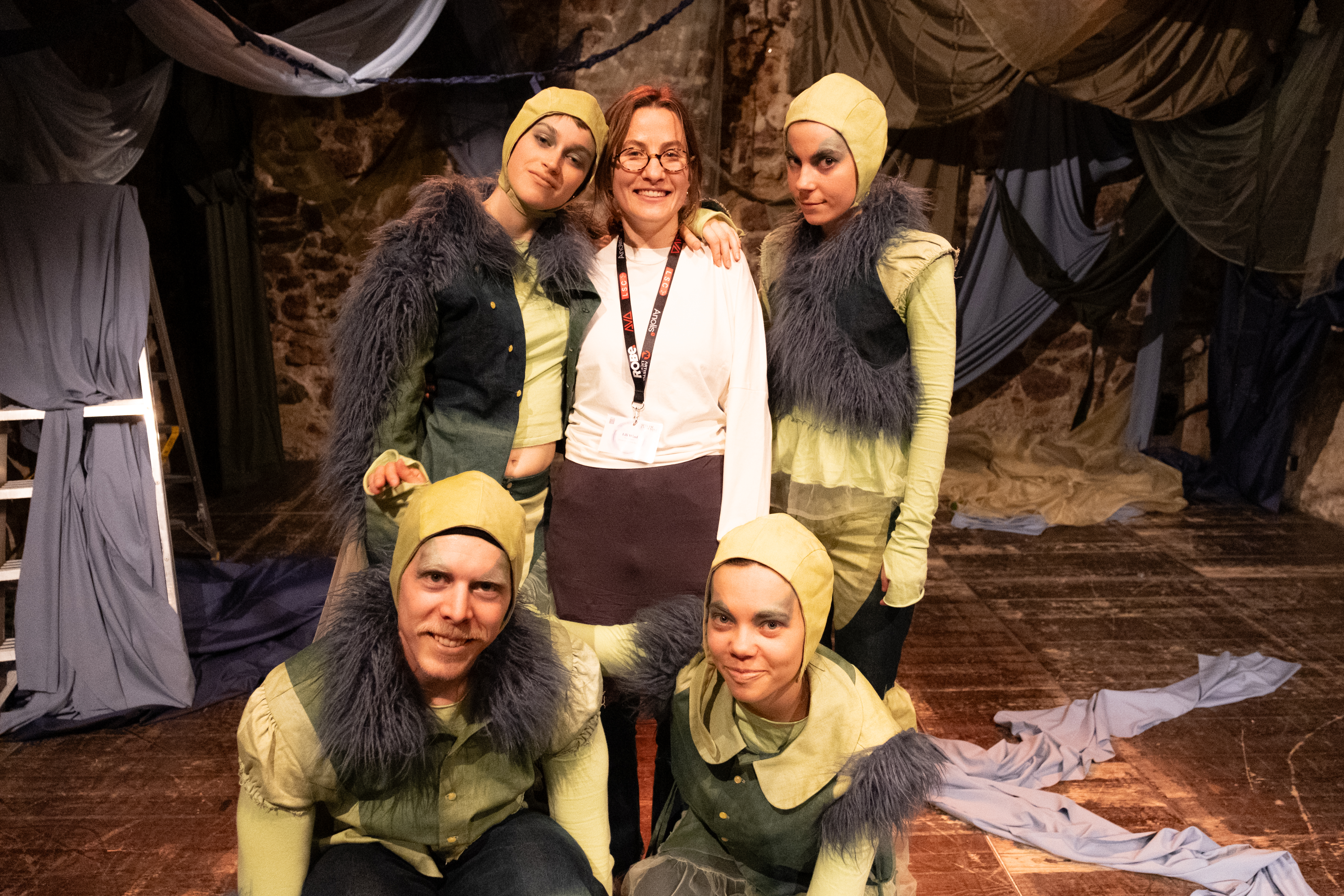
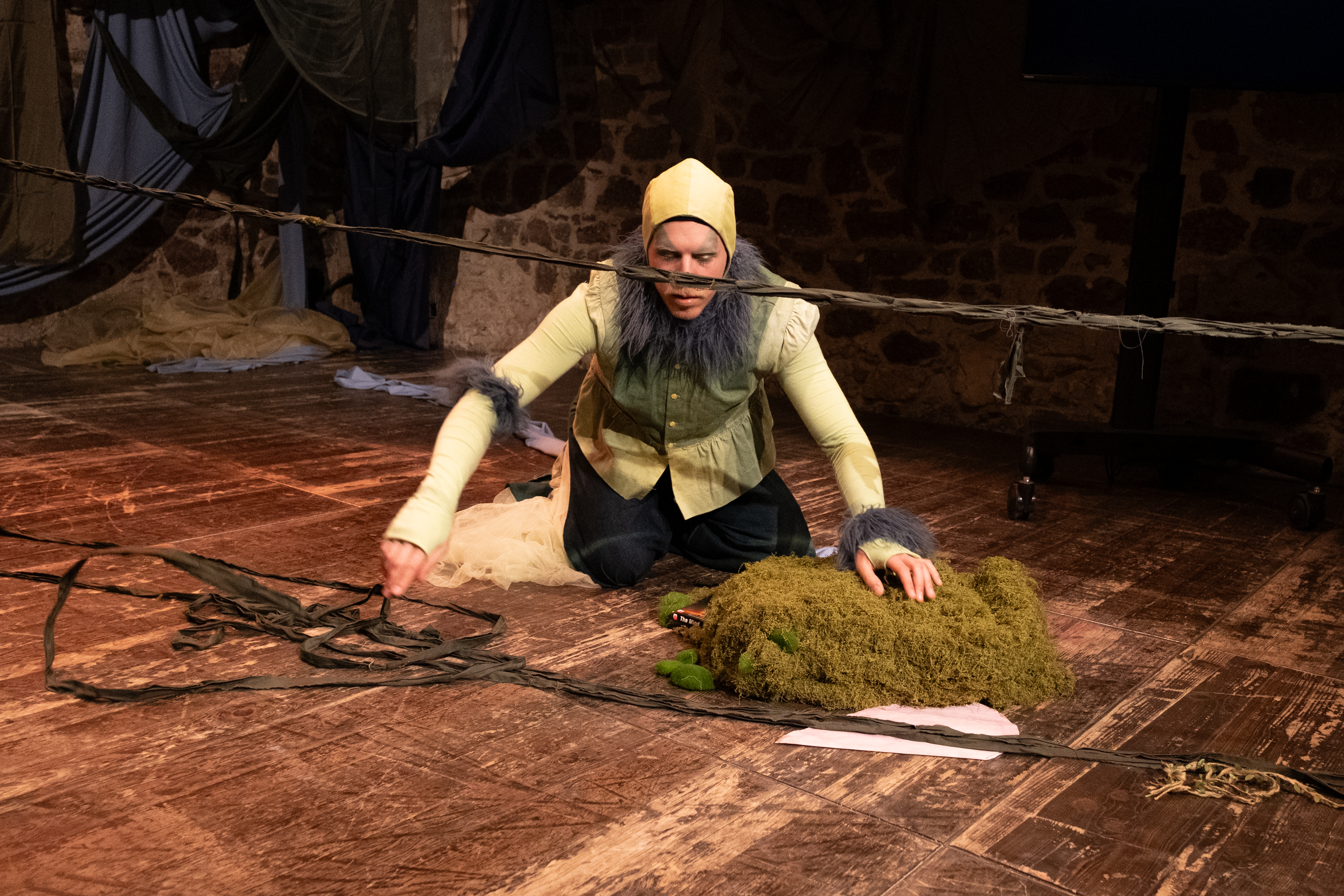
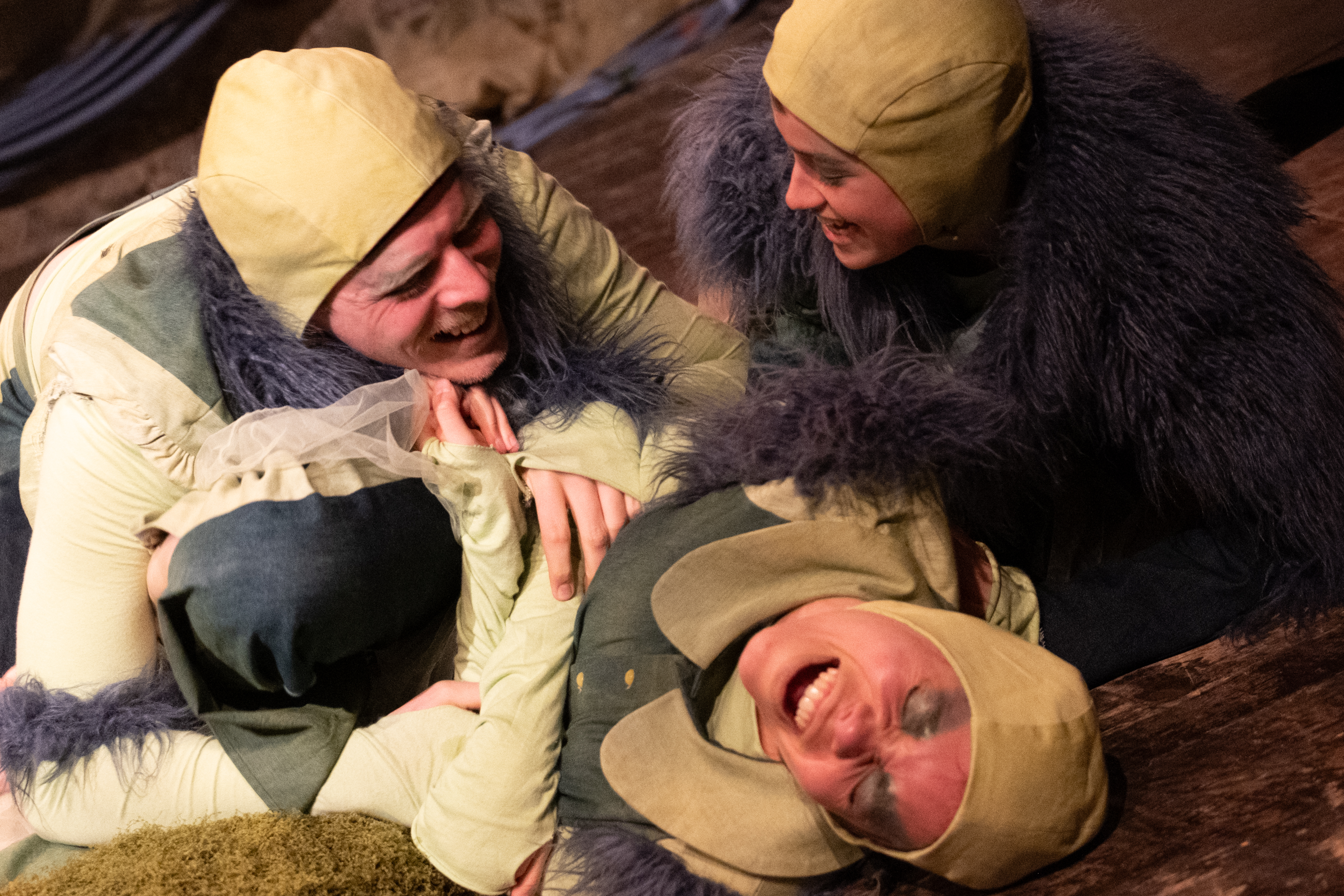
Despite the fact that each character has their "own theme," we perceive the performers more as a single organism. This is reflected not only in the naturally fluid transition from one topic to the next, but also in the perfect harmony of the performers' actions—in their dancing, their intentionally "campy" or stylized singing, and the precise timing of their lines. The stage space expands into the front of the hall but also along the walls of the audience section, while some audience members are seated directly on the stage. The idea of the play's main theme "growing into" the minds of the audience is illustrated via a narrow strip of fabric that winds inconspicuously from the stage to the feet of the audience in the auditorium. Its connection to a larger piece of fabric on stage acts as an "umbilical cord" connecting all elements of the performance. The set is dominated by gender-neutral costumes in shades of green. The visual aspect of the performance is successful, overall, and this is further enhanced by the basement stage itself, which suits the piece perfectly.
The production Co-radical Togetherness offers answers, but even more questions—in the best sense of the word. It forces the audience to reassess their relationships (and not just romantic ones) through the lens of power structures. Among other things, it points out possessive behaviour in partnerships and analyses jealousy and infidelity, identifying these phenomena—rooted in our subconscious for centuries—as the results of a hierarchical and unequal understanding of relationships. The production appeals for a reappraisal of human coexistence; it calls for open-mindedness, courage, open communication without prejudice, and a liberation from normative frameworks. From the visually engaging scenography and the perfect interplay of the performers, a highly pressing question emerges with bittersweet clarity: How do we want to love?
Author: Anna Seifertová
Photo: Nik Machal