Stay or Leave? A Workshop on Democracy as Something That Must Be Practiced
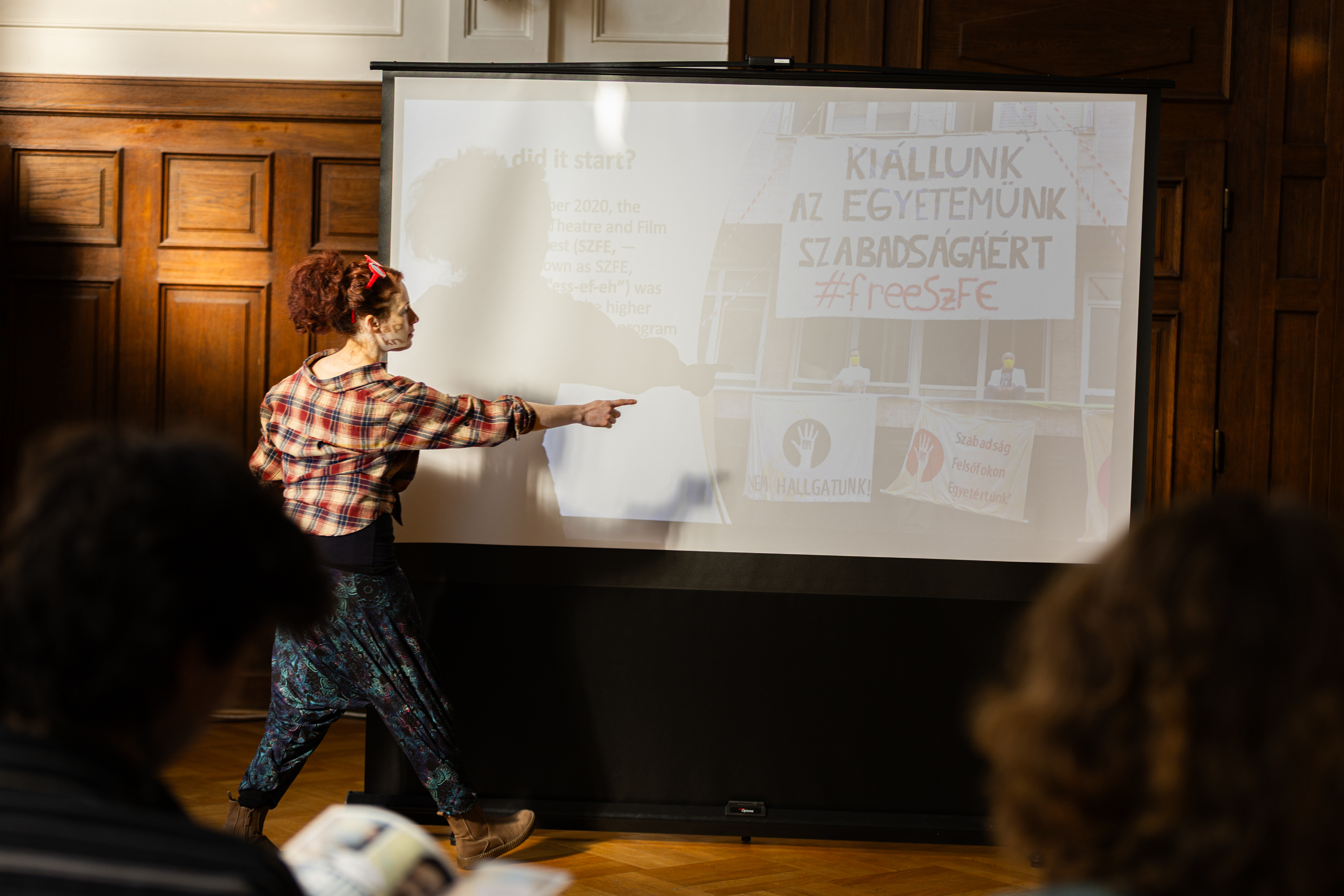
On Friday morning, a semicircle of participants gradually forms in one of the festival rooms for a workshop led by theatre critic and academic Noémi Herczog. In her brief opening lecture, she outlines how theatre can function as a manifestation of democracy. To make her point, she draws on the Hungarian protests of 2020 staged by the FreeSZFE movement.
Before moving on to the practical part of the workshop, some context is needed. Until last Sunday, Hungary had been shaped by Viktor Orbán’s sixteen-year-long regime. For many Hungarians, it came to represent oppression, corruption, strong pro-Russian rhetoric, and the marginalization of minorities and progressive issues. His cultural right-hand man was Attila Vidnyánszky, a figure who has occupied leading positions across numerous theatre institutions and who exercised financial censorship over the artistic community whenever its members failed to express sufficient loyalty to the Hungarian state. SZFE (Színház- és Filmművészeti Egyetem) [the University of Theatre and Film Arts in Budapest, editor’s note] is one of the universities that Orbán’s government effectively privatised in 2020 to serve the interests of the regime. To this day, this has meant high levels of student debt, teachers working without pay, and the censorship of topics that would ordinarily be acceptable in countries with a stronger democratic culture.
In response to these developments, the FreeSZFE movement emerged in the autumn of that same year, made up primarily of students and teachers from the university. They organized democratically run forums on the future of art, encouraged artistic participation, and blurred the boundaries between art and life. At one event, they created a human chain as a gesture of solidarity, with 15,000 people holding a red-and-white caution tape between them as a symbol that came to define the entire movement. At another demonstration, they took a play that was being staged at Budapest’s National Theatre and performed it outside the building. One of the motivations behind this act was to bring culture, often financially inaccessible, closer to the general public. Their loudest act of protest, however, was the 71-day blockade of the university building. Herczog describes this series of protests as a story that is still not over. What remains uncertain is whether society will now be tempted to soften its stance with the arrival of a new governing party, and what Péter Magyar’s government will actually look like.
After the introduction, Herczog asks the audience to stand up and says, “If you agree, take a step forward.” She then presents a number of deeply difficult propositions, which at first do not provoke much open debate. It is only later, in the final part of the program, that the participants begin to work through them in their own reflections. They are divided into two groups and asked to make decisions in situations similar to those faced by the acting students involved in the FreeSZFE movement. You have a choice. You can adapt to privatization, knowing that your university diploma will bear Attila Vidnyánszky’s signature, that you will be taught by unpaid staff, and that for the remainder of your studies you will be expected to remain loyal to Orbán’s regime. At the same time, however, you get to keep the same community of people around you. The alternative is to leave the country. There, besides freedom of expression, you will be confronted with uncertainty, financial hardship (including unpaid student loans), and an almost insurmountable language barrier. You do not know whether you will still be able to continue your studies anywhere else, and in Hungary your education becomes impossible.
The participants approach the scenario in highly hypothetical terms, trying to reflect on aspects of their own university experience that had felt unsatisfactory and, through that, partially imagine the conformism many Hungarians were pushed into. One participant remarks that if Vidnyánszky means nothing to you personally, then his signature is the least significant part of the problem. Another points out that there are universities in Europe that accept new students without requiring them to finance their studies independently. Someone else notes that university provides valuable contacts and networks, which makes attending it particularly important for artists today. In the end, however, everyone seems to agree that the most viable option would be to remain at the university while practicing active resistance. In other words, to continue studying while openly expressing opposition to the new privatized model.
Towards the end, Herczog reveals that most of the real-life actors involved initially chose to stay, simply because at first they could see no other way out. Later, however, FreeSZFE, in cooperation with other European Union countries, came up with a solution in the form of the Emergency Exit program. Even so, the participants are once again confronted with a question that remains unresolved: what will happen to Hungary now? There is no clear answer, but those present stress the importance of trusting the independence of newly staffed institutions and of continuing to hold the dialogues that might help shape a shared narrative.
In the end, only one question remains. Would you stay, or would you leave?
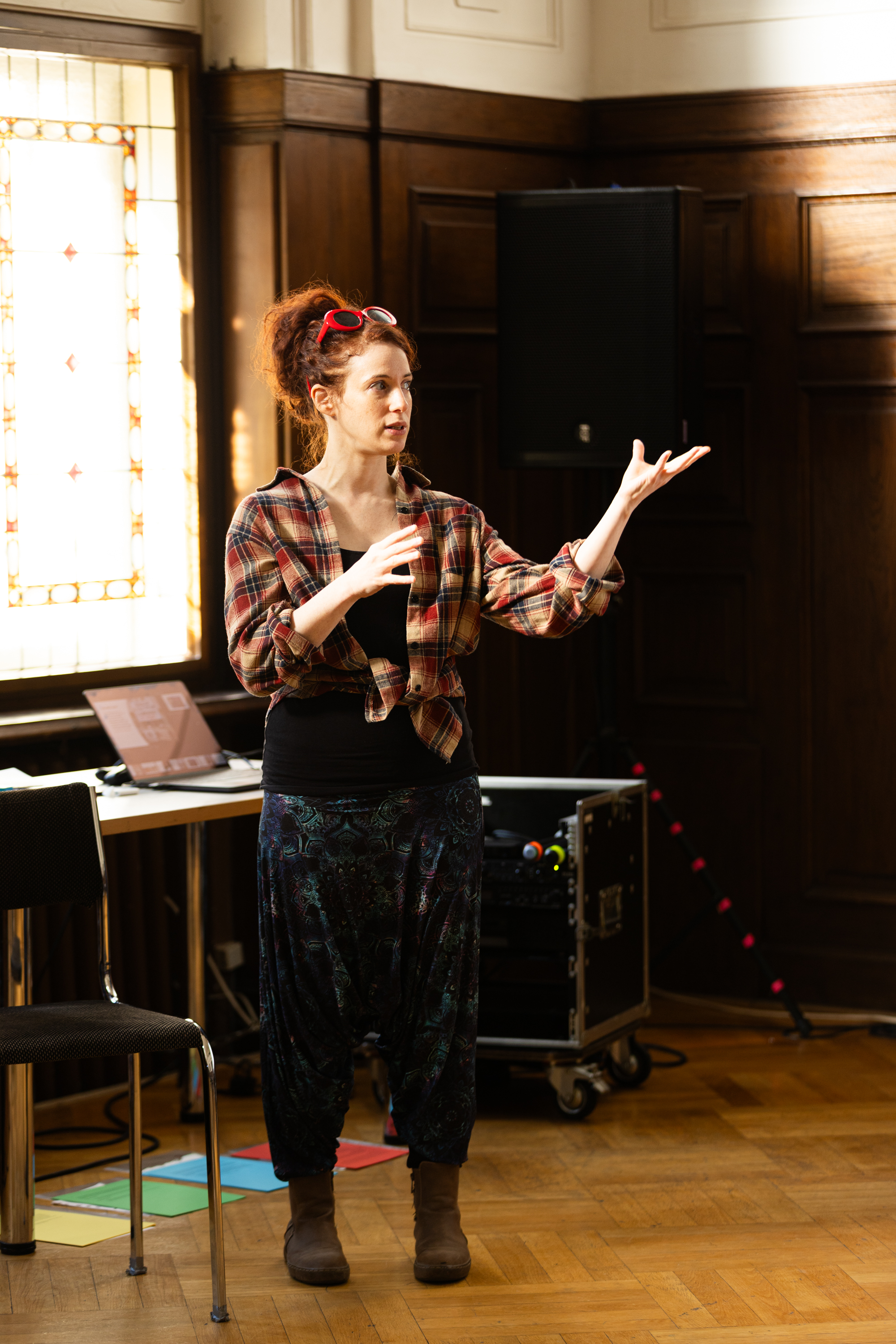
Photo: Věra Tarkowská
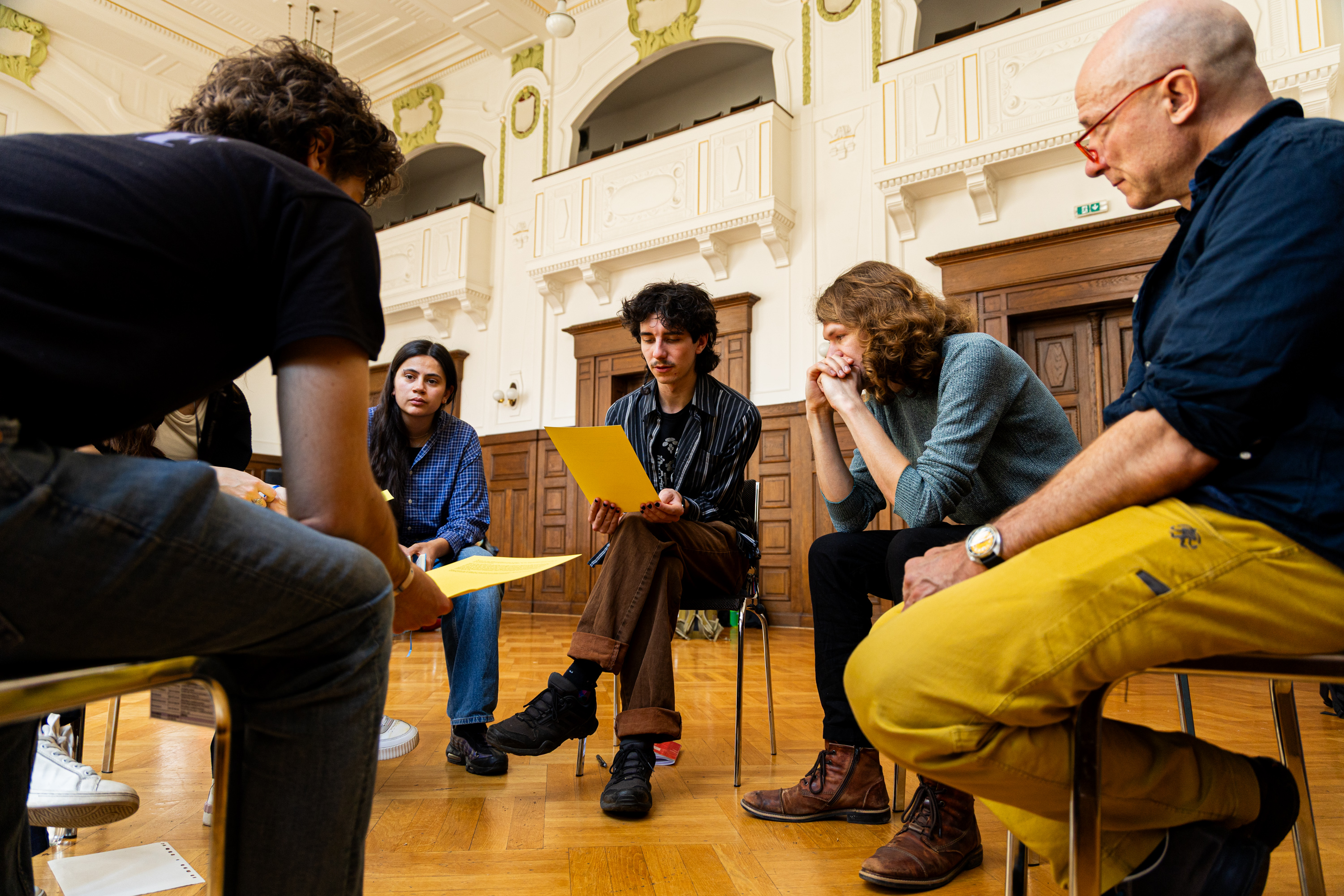
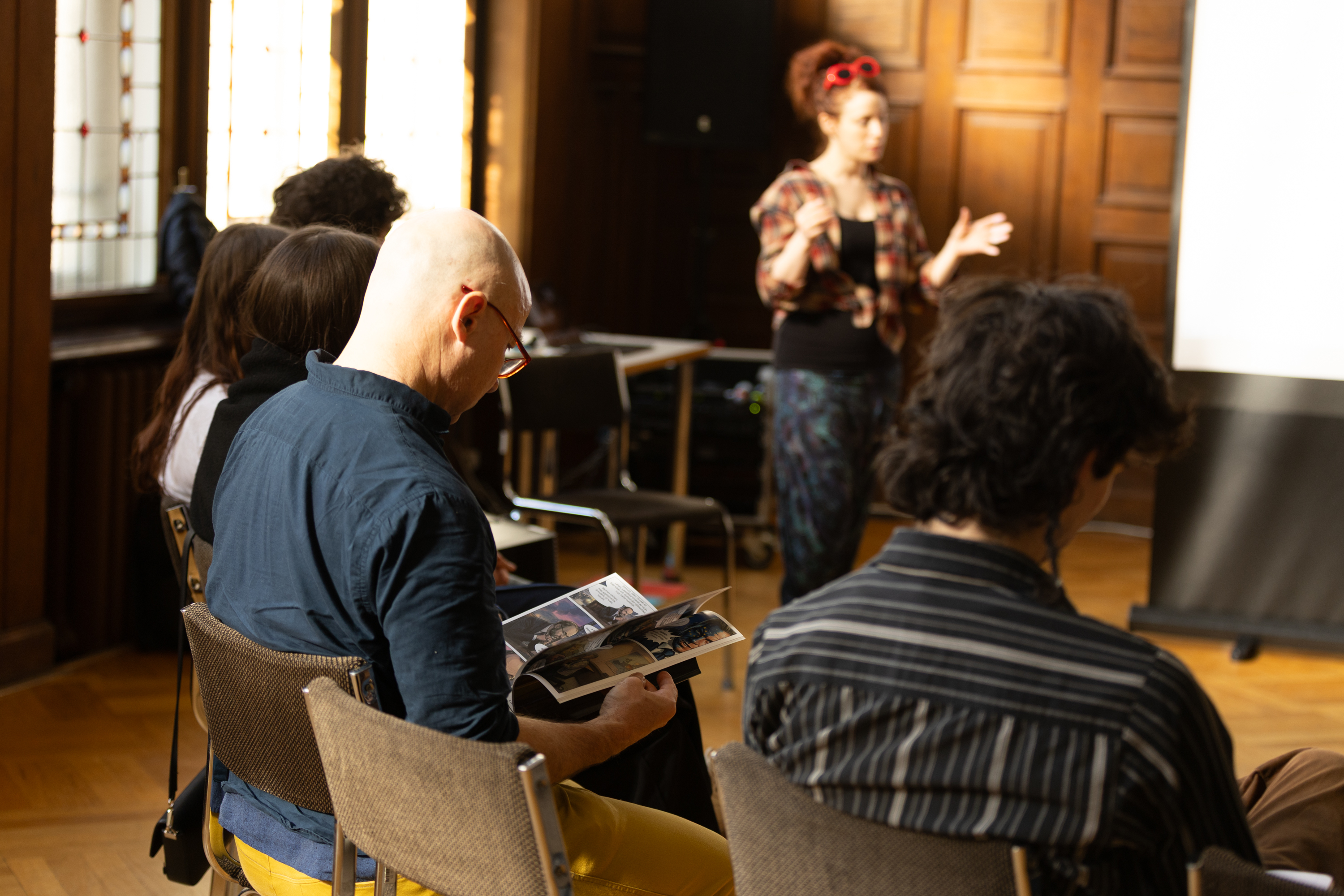
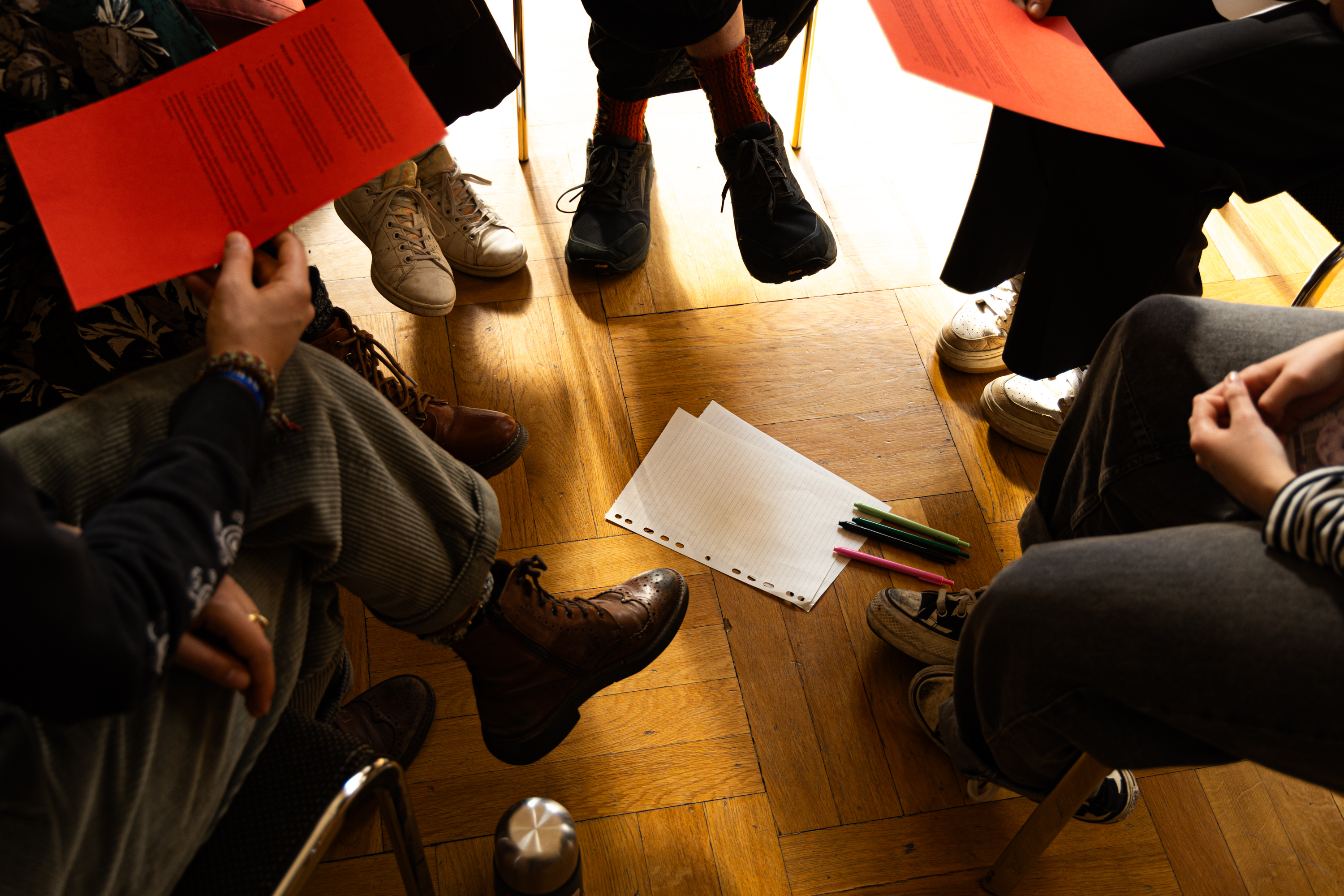
Foto: Věra Tarkowská
Author: Eva Nývltová
Photo: Věra Tarkowská