The Essence of Laika and the Revival of Theatrical Hope
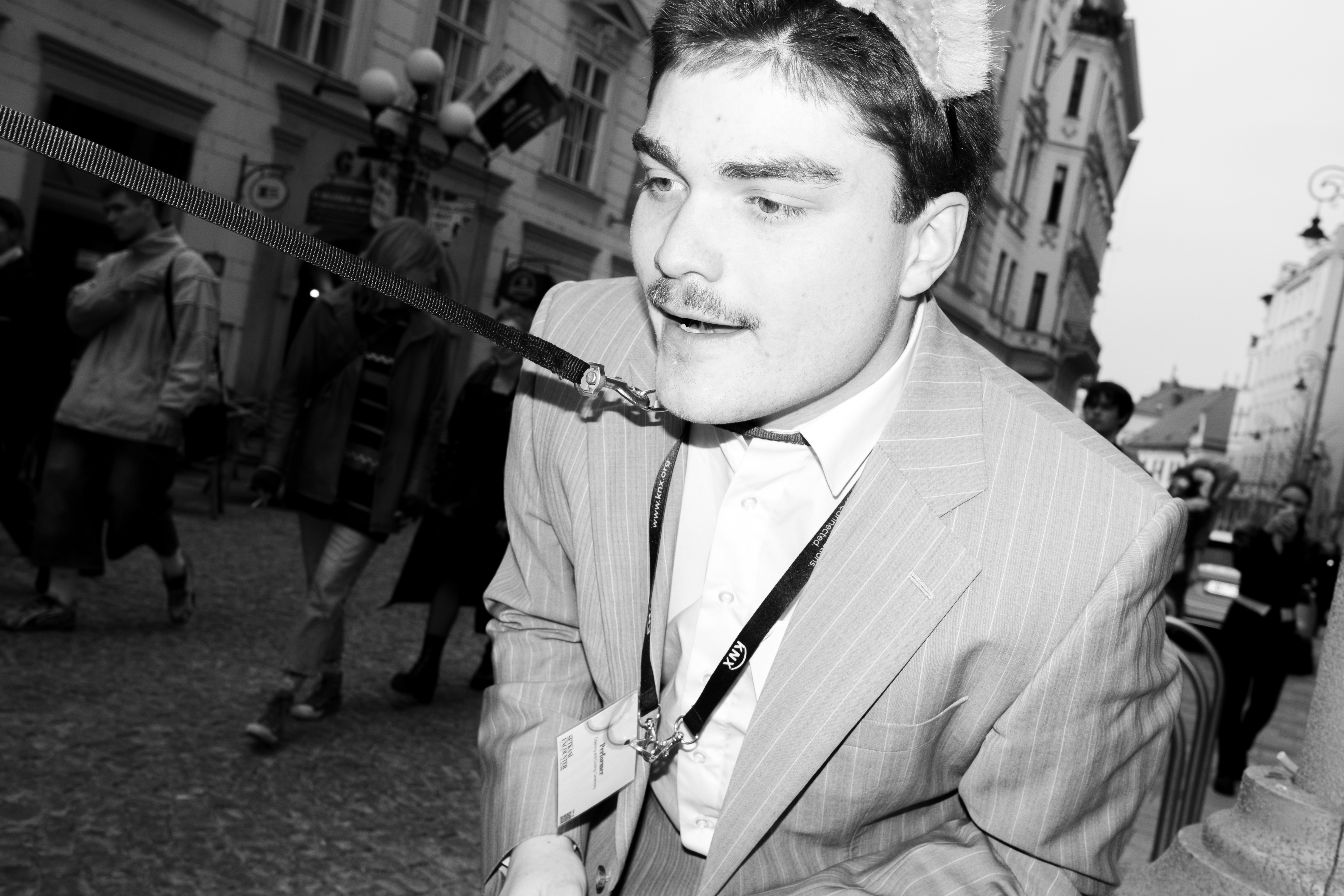
It all began seemingly inconspicuously. Over food. In the crowd outside the faculty, hot dog vouchers were being handed out as a symbol of togetherness and a shared ritual. But then, he appeared. Pravdomil Vincent. “President of Theatres.” A figure who materialized on the podium by the entrance to JAMU like an echo of everything that suffocates art.
“Welcome people! Welcome to my… well ours, but basically MY festival! You have all come to see me. How nice of you!”
His world is chillingly straightforward. The artist is a genius, the theatre is a money-making machine, and women, going by his own words, are presumably there only to stimulate the male libido. In his world, artistic solidarity has morphed into marketing, and the hot dog was not a community gift, but a populist bribe.
The President preached about “High Art”, measured solely and exclusively by the size of the receipts from Europe's wealthiest theatres. “Art is where money gets transformed into something aesthetically pleasing,” he proudly proclaimed. Pravdomil Vincent essentially revealed himself to be a dog. A greedy dog of commercialization, devouring art purely for profit. And so it was.
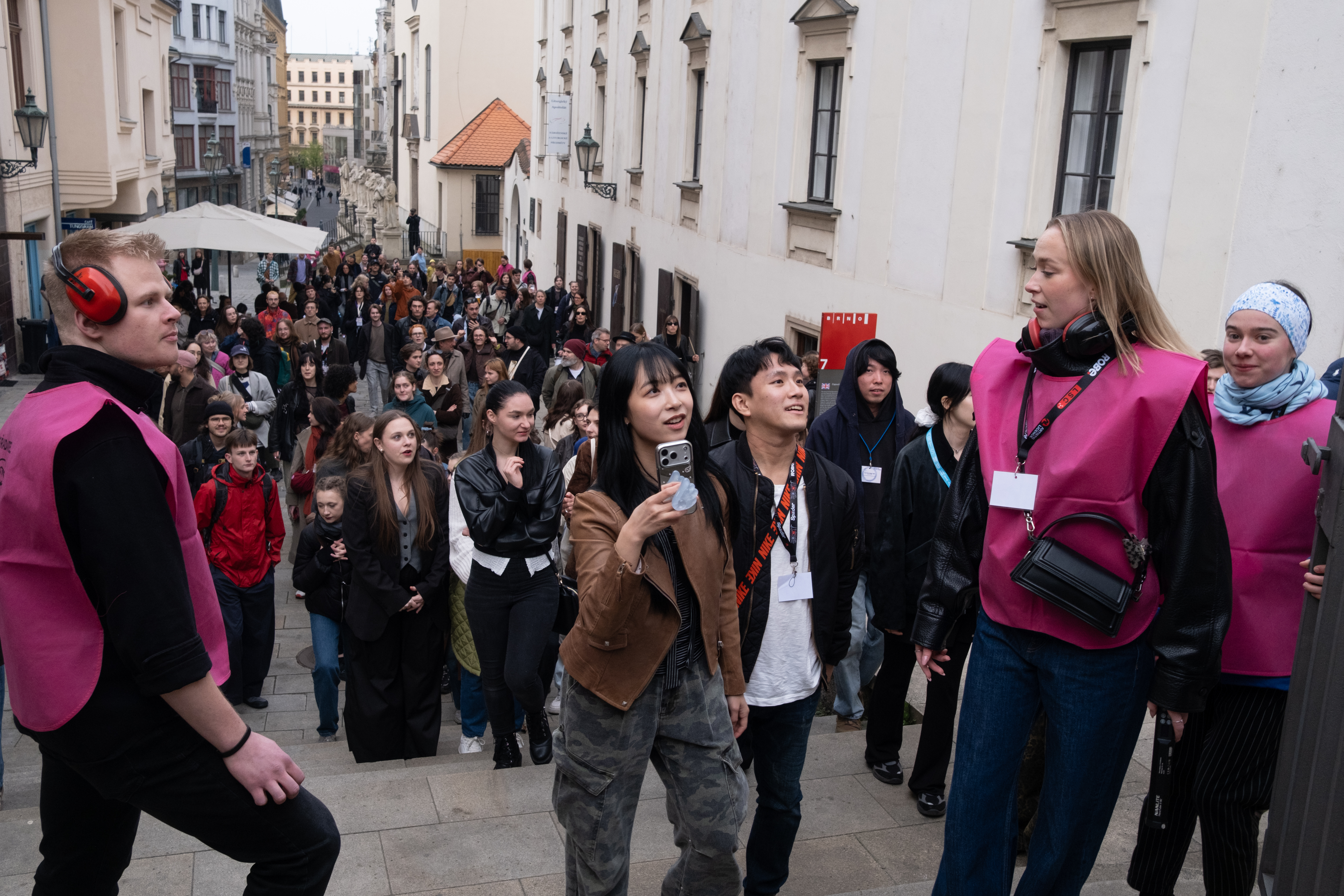
Yet the others in the procession were hungering too. Perhaps not for physical nourishment, however. That gnawing hunger, embodied by the promised hot dog, was perhaps, in reality, a profound longing for a return to the innocence and purity of theatre.
The crowd, famished for true spiritual satiation, thus set out behind their guide with the promise of a journey to heaven. The pilgrimage to Capuchin Square, where an angel awaited, became a purifying procession. The angel acted not merely as a comforter here, but also as a magical bridge to better tomorrows.
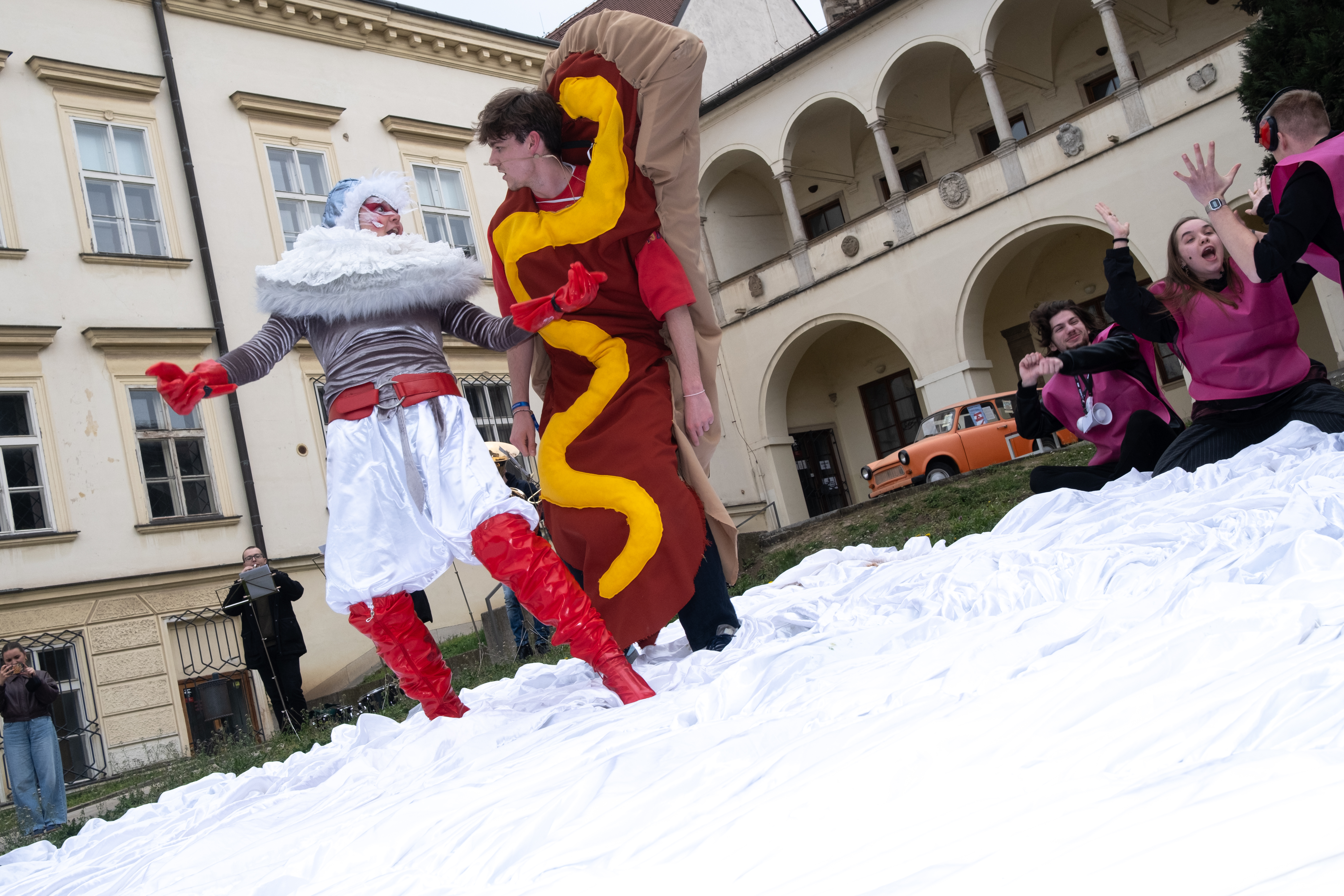
The final destination of the ceremony was the Goose on a String Theatre, where Laika took the floor. Yes, that Laika. The former cosmic sacrifice who burned to death on the altar of someone else's success and destructive ambitions. A chilling and simultaneously liberating parallel. While Pravdomil Vincent preached about theatre as an engine for ego and money, the ritual of Laika's resurrection spoke of the exact opposite. Of rejecting theatre that destroys a person for the ambitions of others.
"Here, all your wishes can come true.
Tell me your wish, and I will make it happen.
You want art that is made not for money or fame but for the people who created it? You deserve it. Ruff!
You want to create, together, in an environment where no one is worth more than another, where no one is seen merely as a means but always as an end in themselves? You deserve it.
You want theater where actors are not just tools in the director's hands but full and equal artists? You deserve it.
You want theater that doesn't look back with tears in its eyes at what once was, but hungers – ruff! – for what is and what will be? You deserve it.
You want theater ruled not by dictatorship but by collaboration, where egos don't battle but artists cooperate? You deserve it.
You stated that in a world where comfort means collaboration, you choose discomfort. That if institutions cannot give you an environment in which you are able to create, you will build your own.
That if institutions only want to make money, you have a simple message for them: Fuck institutions.
Ruff! Ruff! Ruff!"
– Laika
In short, this year's Encounter festival opened with a manifesto of participation. It demonstrated that theatre need not be a slaughterhouse of ambitions, as Vincent's speech implied, but a safe space where we return to the absolute beginnings, to the magic circles and spirals that connect us. We may have been handed a hot dog at the start, but at the finish line, we realize that we were starving for something else entirely. For the hope that theatre, instead of destroying, can resurrect.
"Let the magic happen. Let art be true."
Author: Aneta Zákoutská
Foto: Nik Machal