Thus With A Kiss I Die: Romeo and Juliet… and Juliet… and Juliet…
Eyes, look for the last time. Arms, take your last embrace. And, lips, O, you doors of breath, seal with a righteous kiss a dateless bargain with engrossing death.Come, bitter conduct, come, unsavoury guide! Thou desperate pilot, now at once run on the dashing rocks thy seasick weary bark!Here’s to my love. O true apothecary, thy drugs are quick. Thus with a kiss I die.
Ali: Is it even necessary to make a new version of worn-out Romeo and Juliet in today's world? Aren’t we all just sick of it? Don’t we all know this by heart already? Is there another hidden message that we have not discovered yet? Is there even anything else that we can learn from this play? There really isn’t anything to investigate!
Justi: I do not really agree with that, even though I understand where you are coming from. I think that every new reimagining brings a new point of view, a new interpretation and a new experience to the table. Take the play Thus With A Kiss I Die we saw at HaDivadlo, for example. It brought a new, interesting touch to the work, spiced up with its own cultural context. Was there nothing that piqued your interest?
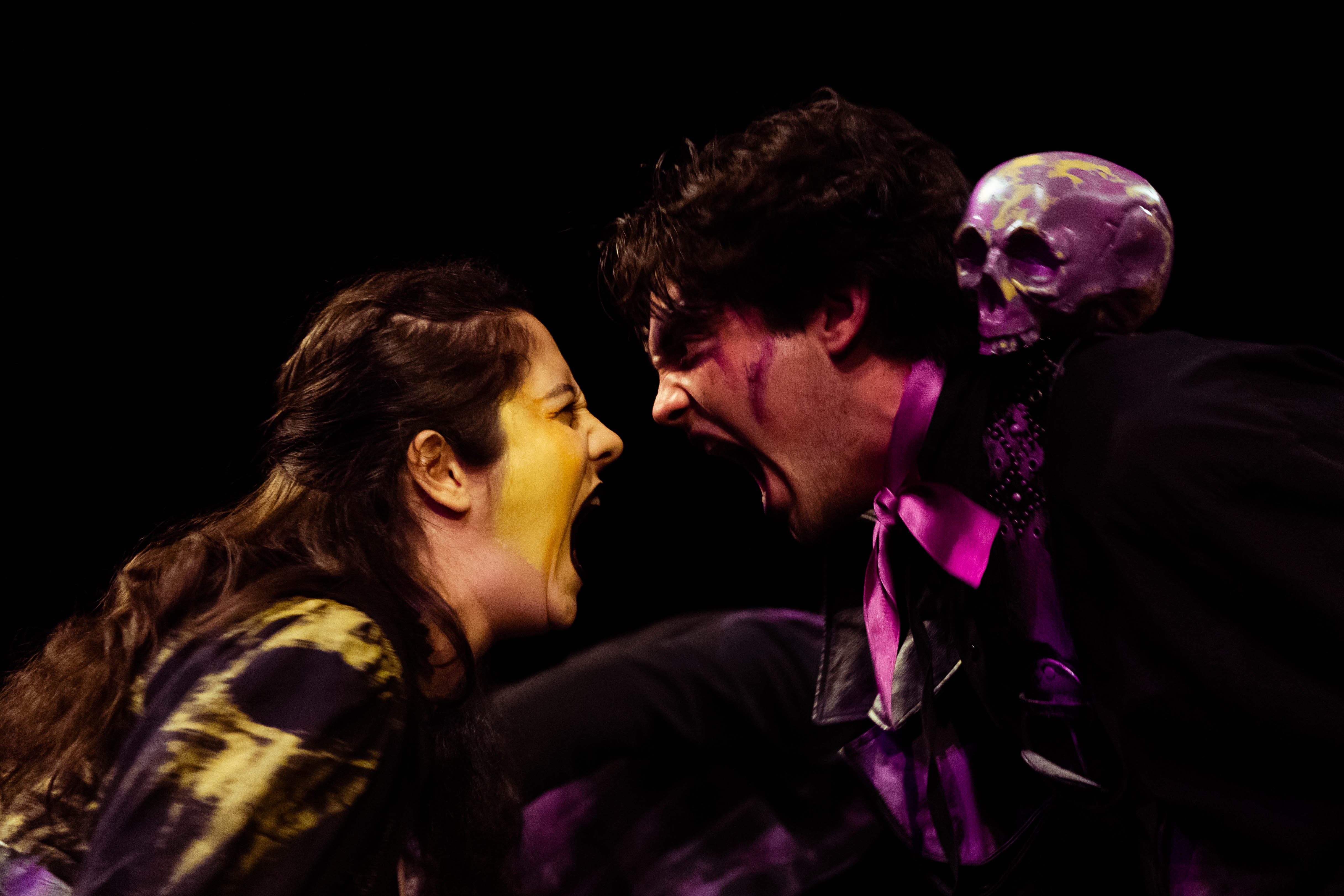
Ali: On second thought, yes. An interesting feature is, without a doubt, the screaming that we encounter through the whole play. Lineage of Capulets and Montagues, each standing on their own side of the set, screaming till they are out of breath. A loud scream full of hate that symbolises the duel between those feuding families. It is almost a war environment. But there are many more strong emotions presented through the screaming. Screaming follows us from birth to death, a part of life. The mother screams while giving birth, we scream when we lose a loved one, or when people die around us. We are born screaming, and we die screaming. Screaming is sadness, rage, and pain.
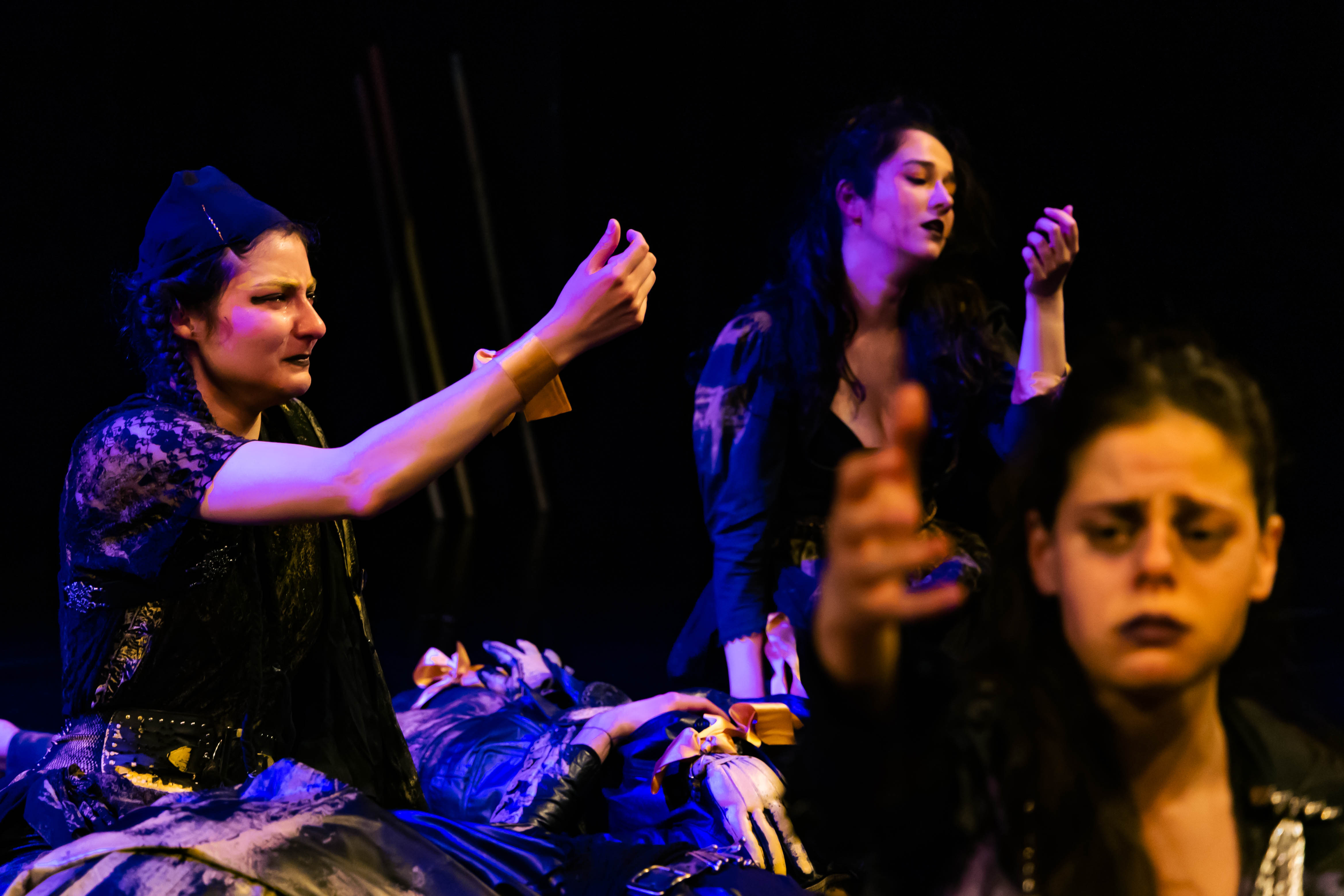
Justi: See? That is true. I was intrigued by the costumes, for example, that looked like they were created by mixing different fashion trends fromthroughout the centuries. Even though they are inspired by the renaissance and have many flowing layers, they do not look like authentic gowns from the 16th century. They combine disparate elements and create something new and original. Even individual costume details carry symbolic meaning. For example, did you know that the male characters have colourful gloves sewn onto their crotch and various other parts of their bodies to accentuate their masculinity? I think that's pretty bold.
Ali: Each Juliet and each Romeo had a unique costume. We are used to it being pretty obvious who is who: there is one Juliet, and there is one Romeo. There is always the protagonist and the supporting character. Here, however, there are multiple male and female characters representing one couple – Romeo and Juliet. Therefore, there are several separate couples that are the main characters of their own stories – even though they are not the main characters, generally, in the play.
Justi: We are all the main characters of our own story. And what is more, every one of us plays a different role in other people’s stories. For someone, we may be a positive, caring, likeable character... For someone else, we play the role of an antagonist or are not important at all.
Ali: For every person, their own story is the most important one, and the most interesting – we people are selfish to the core. In my own eyes, I am the main character, and other people’s stories are minor for me, expendable to me. Every story is the most important to its actor. But from a broader perspective, no story is more important than any other because we are all equal.
Justi: Exactly. In this play, they are viewing the story of Romeo and Juliet from a different point of view than is customary. They do not perceive their relationship or love as the main theme, nor do they even point it out in any peculiar way. They perceive love, death, and other aspects of life as a part of something bigger that connects us all, something that everyone has dealt with already or will deal with in the future. We are not special, we are a part of a cycle, which of course does not detract from our individual experiences. Maybe it's actually somewhat comforting that we're just a small cog in a huge machine.
Ali: Maybe this is the exact reason for us to keep coming back to the classics: to seek new perspectives.
Authors: Justýna Jirsová, Alena Růžičková
PHoto: Jasmína Georgievová