Two’s a Crowd
SETKÁNÍ/ENCOUNTER 2026 is already successfully in full swing; hotel beds are slowly becoming familiar, breakfasts are still hearty, and faces that were once unknown are now at the very least... recognizable. Individual experience is gradually transforming into collective co-experience – have you stopped to realize that there are more of us here, that we aren't alone at the festival? While the lecture Better Safe Than Sorry: How Crowds Really Work at Live Events didn’t focus specifically on this view of togetherness and the co-presence of visitors or, by extension, the audience, it did at least point out several remarkable phenomena that I, as a theatre scholar, seek out and encounter in various forms nearly every day.
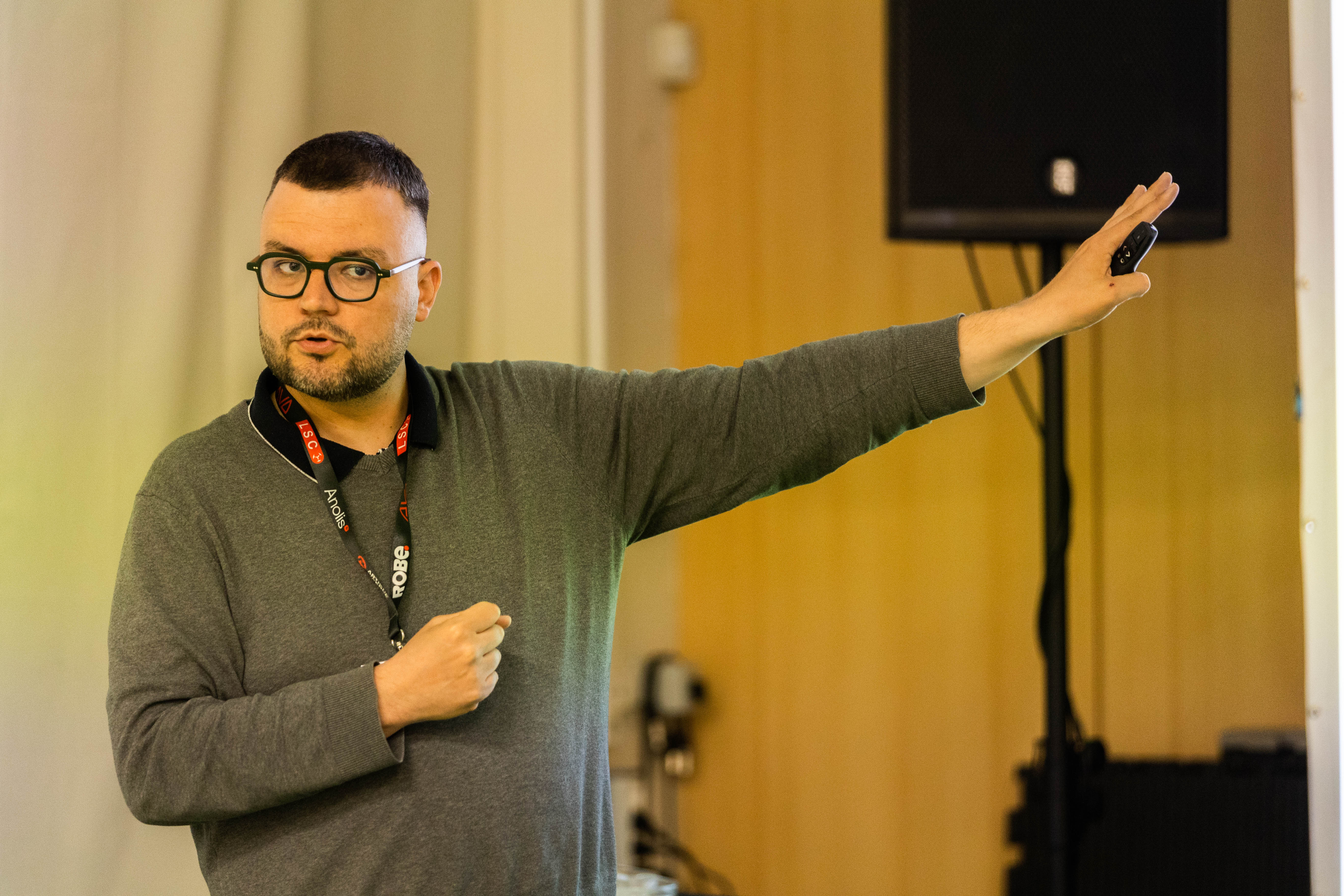
The speaker was Martin Královič, a safety expert and founder of the organization Safety Crew, which is responsible for the security of, for example: the largest demonstrations after 1989 in the Czech and Slovak Republics, the Pohoda festival, or even Rock for People in Hradec Králové. His presentation, therefore, primarily consisted of a thorough dive into the security arrangements for these festivals and events, but it also introduced fundamental differences between festivals in Central and Northern/Western Europe. One example for all: every year Rock for People employs several thousand security members; the many times larger Danish festival Roskilde (circa 120,000 visitors per day) needs exactly 12 – truly, only twelve. Královič attributes this massive difference primarily to our post-communist mentality and to a certain stunted view that when a person breaks a rule, they deserve to be slapped and promptly kicked out. The second (let alone third or fourth) chance the visitors get in Denmark simply doesn't exist here. But so as not to mystify you, the "safety" of the festival is handled by volunteers, of which there are around 29,000 at Roskilde. However, their job has nothing to do with slaps and punches, as we might be used to. They’re sort of guides – Královič described them as grandmas taking care of their beloved grandchildren. His organization is trying to apply this significantly more humane and, above all, more functional system here as well, which he is undoubtedly succeeding in doing, even though slowly.
Back, however, to my perhaps not yet entirely clear introduction. Královič reflected several times on situations that could easily be described as theatrical, dramatic, or scenic. Let’s start with his organization’s overall approach – the staff toward the visitors. Everyone wears a name tag, is obviously highlighted by a reflective vest, and has a radio – these are completely obvious aspects of a theatrical costume that accentuate the organizing team. They also get to know the visitors themselves before the concert starts as they high-five or fist bump, introduce themselves, so that if any problem were to occur, the reaction may be much faster and more effective. Through this, the entire team builds trust with the visitors, a certain rapport, just as in theatre we gradually get used to the fact that someone is performing on stage. They might even be trying to communicate unpleasant topics to us, but they show us that we are in it together, that they will guide us through it all. Simply put, we don’t have to be afraid, because this is a safe space for all of us, or at least should be.
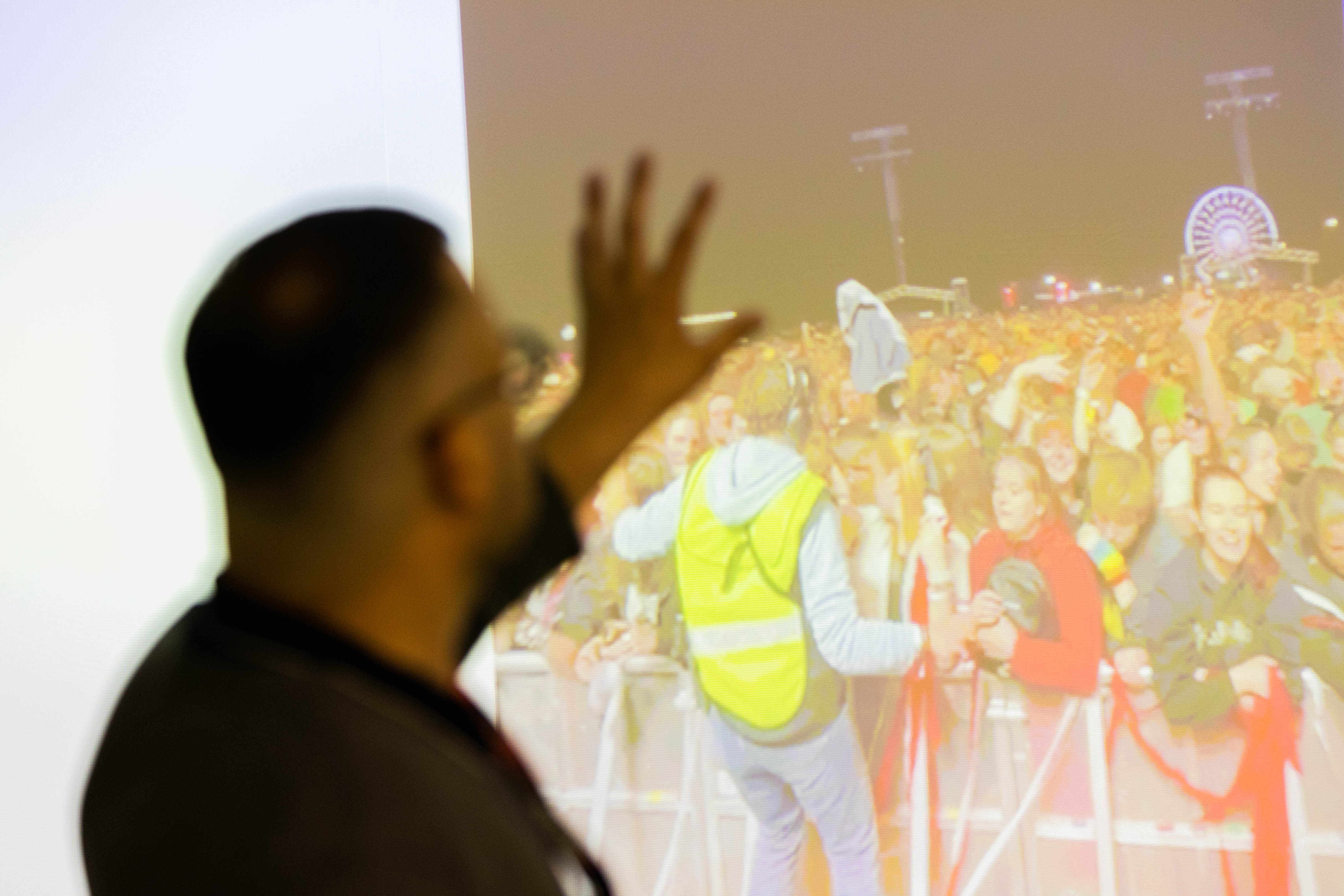
For theatre studies, however, perhaps the most beneficial insight Královič presented was a tactic their organization uses in certain cases. Let me outline the situation: one of the headliners at a large festival is finishing up and many visitors want to leave the stage area, however, a problem has occurred behind them that could endanger them. The team is ready with their pre-prepared “authentic” moment, a simple performance of sorts. They play pretty much any well-known “banger”, and the organizers jump onto the barriers and start dancing together with the crowd. This catches the crowd's attention, holds them in place a bit longer, and in the meantime, the problem behind them gets resolved. Shortly afterwards, they can leave completelysafely and undisturbed, without having even the faintest idea that something like that occurred, that they became part of a “real” performance. Actually, with slight leeway, such a tactic could be classified as a genre of theatre that originated during the 1960s in the USA, aptly called “guerrilla theatre”. The crowd, in this case we could dare to say the audience, has no idea at all that it is a pre-prepared stunt, a performance (as mentioned). They are being manipulated, but in this case (luckily) for their own good and for their safety.
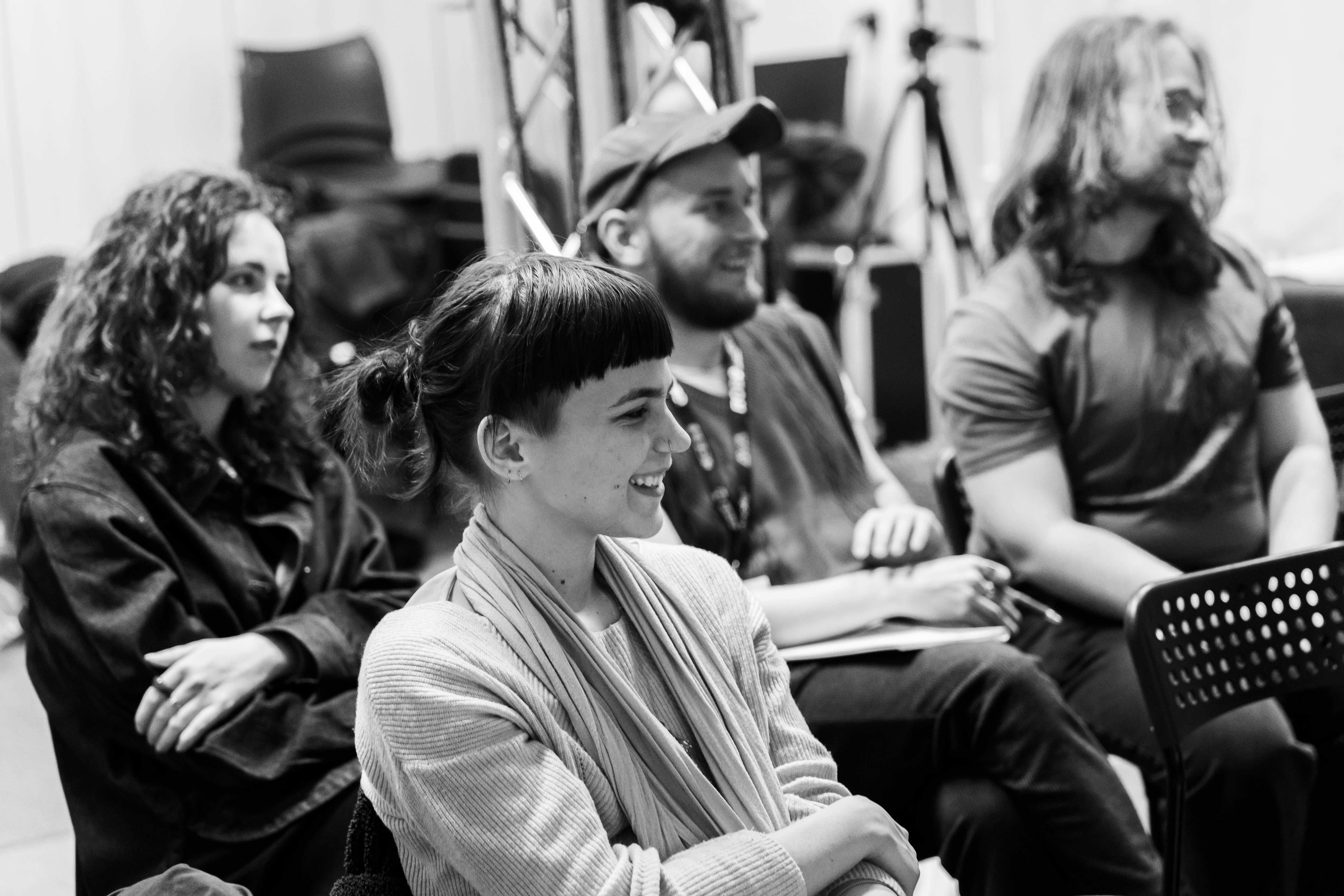
My aim, with this brief reflection, is to help the reader realize that when we’re a part of a crowd or an audience, we are constantly being manipulatedand lied to, and that this specific coexistence is a significantly more complex experience than it might seem at first. I simply think that when the audience is conscious and informed, it can experience all events, actions, etc., much more intensively and extensively.
Another similarity to theatre that emerged from the lecture is the baseline state of the organizing team (the would-be creative team in theatre) and the visitors (the audience). The organizing team knows its festival intimately. As Královič said, of course they know that the toilet is over there, but the visitors simply don’t know that if they aren’t explicitly told or shown – that’s what signage, information on social media, etc., are for. We can find a very similar relationship in theatre, as the creative team obviously knows what is being performed and what it’s supposed to mean, but the audience knows absolutely nothing about it. It is therefore their goal (I would say even duty) to enlighten the audience using all sorts of theatrical or metatheatrical techniques (e.g., using stage metaphors and scenography, but also annotations, posters, etc.).
A bit of unsolicited advice to wrap up – the legendary German theatre scholar Erika Fischer-Lichte defines theatre as a specific state of co-presence(perhaps even co-existence) of performers and observers who constantly influence each other and thus create and shape the show or performance. But what is key is that even if the events/performances/concerts/shows are created by the best creative team, they can still only assume and predict what might happen, how we as an audience might react. But no one can ever know. So don’t be afraid, act up, have fun, be engaged and spontaneous,surprise them, and above all, surprise yourself. Because it is not so much what takes place in front of us that is important, but rather what takes place within us and between us – between one and the other.
Author: Jakub Tesárek
Photo: Jasmína Georgievová