Who done it?... Hubert (and Ivana)
At Studio Marta, as part of the SETKÁNÍ/ENCOUNTER 2026 International Festival of Theatre Schools, the (originally graduation) performance WHODUNIT by the Department of Nonverbal Theatre at Prague’s HAMU took place. The author and performer is Ivana Kalová, accompanied on stage by a trio of musicians. Another essential component of the performance was the very natural and humorous interaction with the audience.
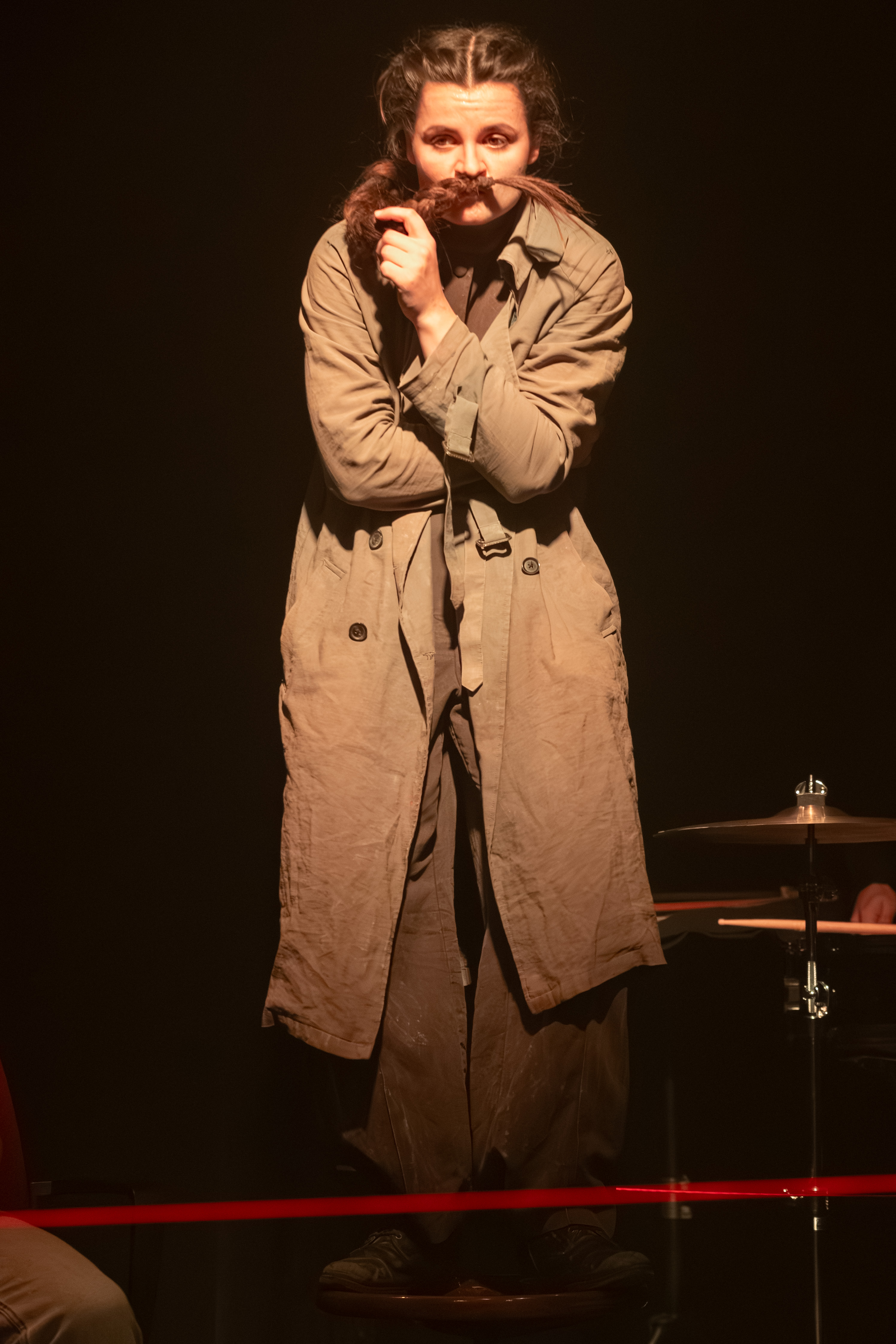
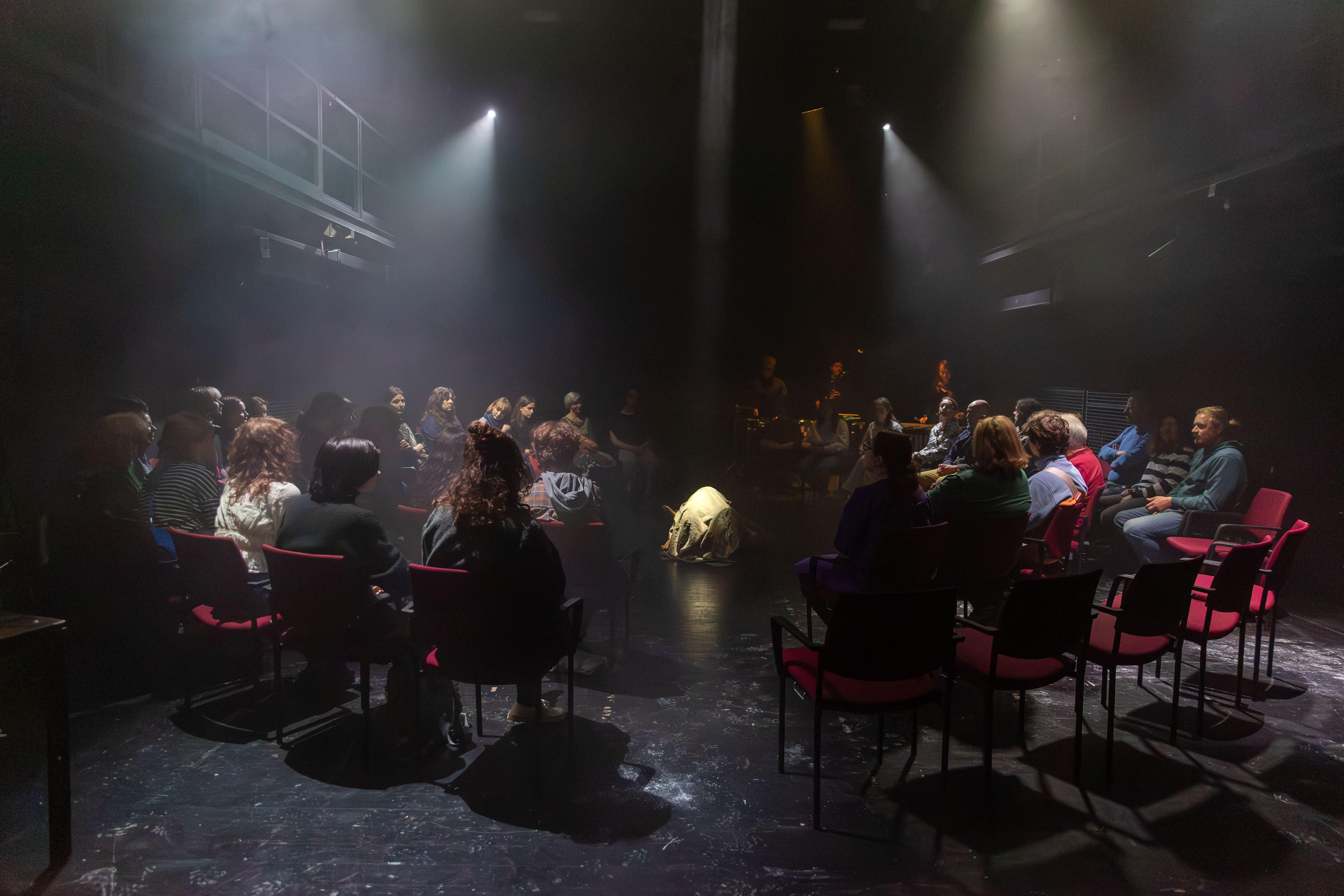
The title WHODUNIT refers to a subgenre of detective and crime stories in which the main focus lies in identifying the perpetrator. From the very moment of entering the hall, the audience was immersed in a mysterious atmosphere, enhanced by smoke and the tones of a vibraphone. The unusual circular arrangement of the auditorium suggested that this would not be a conventional theatrical experience. At the centre of the stage stood a figure hidden beneath a coat, illuminated by a beam of light. Kalová worked with the gradual revelation of her hands, eventually uncovering her head and beginning to portray the characters of the detective story – a woman and a detective.
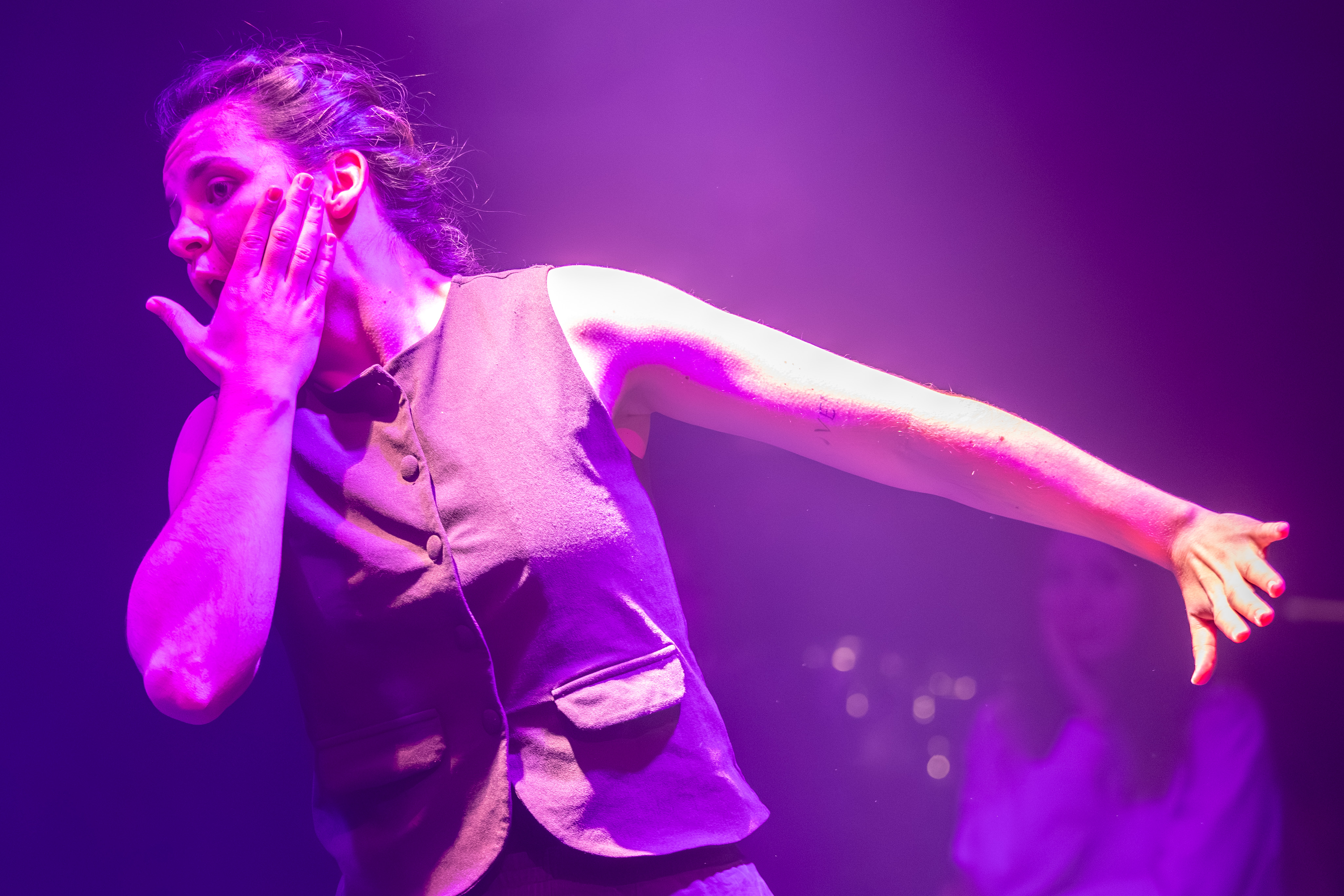
The two characters were clearly distinguished through movement stylization as well as lighting changes. While the woman moved gently under a pink spotlight in a pantomimic style, the detective’s portrayal leaned more towards physical theatre. A recognizable element appeared in the form of the coat, reminiscent of the one worn by the iconic television character Lieutenant Columbo. The circular auditorium created an intimate atmosphere that absorbed the audience and drew them directly into the centre of the action. Kalová skilfully performed in all directions, ensuring that no viewer was deprived of her expressive facial work. At the same time, some audience members did not yet realize that they would soon become part of the story. In this sense, the spectator became an essential partner for the performer.
It is worth mentioning the inventive and carefully considered use of props, although one might question whether a braid of hair can truly be called a prop. Its length allowed Kalová to use it as a substitute for a pen, with which the detective appeared to take notes. In another moment, she casually placed a strand of hair under her nose, creating the image of a thoughtful investigator. Another striking visual moment involved a powder compact, the contents of which she poured onto the floor before lying down and outlining her body in the white substance, echoing the chalk markings found at a crime scene. At the same time, visible traces of other things remained in the powder. A red string, symbolizing the connections between clues on an evidence board, was then woven through the audience.
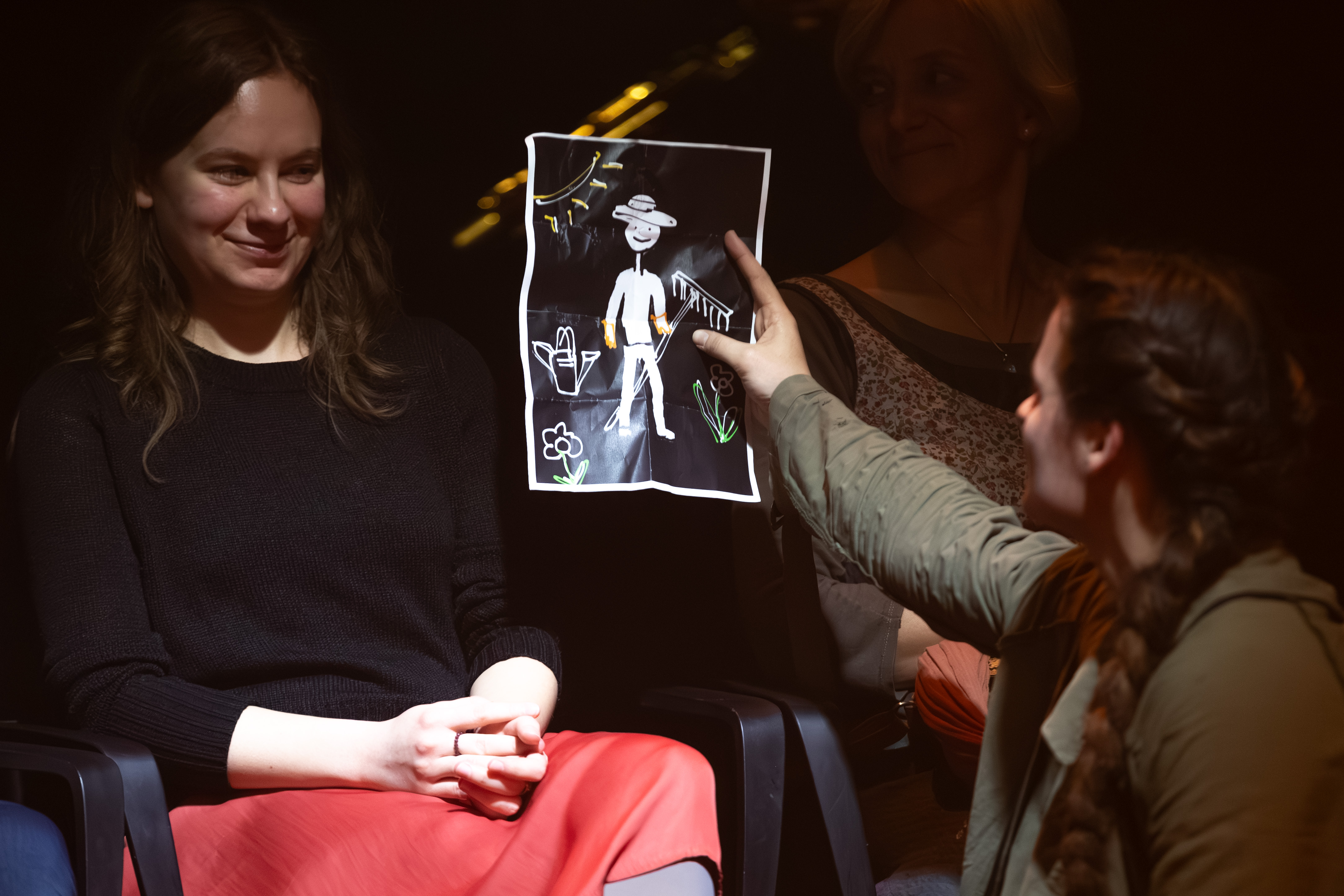
The humour was situational, mostly stemming from interaction with the audience. It was enough for a spotlight, accompanied by dramatic music, to fall on a spectator who happened to be drinking, and the room would erupt in laughter. Gradually, Kalová involved five audience members, repeatedly returning to them with a suspicious expression. Situations introduced at the beginning of the performance reappeared towards the end in the same form, but within a different context, offering a new perspective.
When this production was being put together, the music was originally intended to come from all corners of the space, as bassoonist Viktor Sabol explained in the post-performance discussion. This idea was ultimately abandoned, as the musicians would not have been able to hear one another. Since mutual connection, as well as connection to the performer, was essential, they performed from one side of the hall. Alongside the bassoon and Petra Brynychová’s vibraphone, Milan Dotlačil created sound effects using percussion.
Using only movement, the body, gestures, facial expression, music, lighting, and the single word “Hubert”, this performance offered an experience that audiences will undoubtedly remember.
Author: Tomás Chudoba
Photo: Darek Hoffmann